Tire pressure plays a critical role in your vehicle’s safety, fuel efficiency, and overall performance. But here’s a common question many drivers have:
What is the correct tire pressure after driving? Should it be the same as when the car is cold?
Let’s clear up the confusion with some science, real-world advice, and practical tips.
Tire Pressure After Driving: Why It Rises
When you drive, your tires generate heat through friction as they roll against the asphalt. This heat warms the rubber—and more importantly, the air inside the tire.
Since air expands when heated, the pressure inside your tires increases naturally the longer you drive. In fact, depending on how far and how fast you’ve been going, your tire pressure can rise by 3 to 6 PSI or more compared to when the tires are cold.
But here’s the key:
➡️ This increase is normal and expected. Do not deflate your tires to bring the pressure down after driving.
What Is the Recommended Tire Pressure?
Car manufacturers provide a specific tire pressure recommendation—typically measured in PSI (pounds per square inch). However, this number refers to the pressure when the tires are cold, meaning:
-
The car has been parked for at least 3 hours, or
-
It has been driven less than a mile at low speed
📌 You can find this recommended pressure:
-
On a sticker inside the driver’s side door jamb, or
-
In your owner’s manual
Important:
Do not use the PSI number printed on the tire’s sidewall—that’s the maximum pressure the tire can safely handle, not the ideal setting for your specific car.
How to Check Tire Pressure (The Right Way)
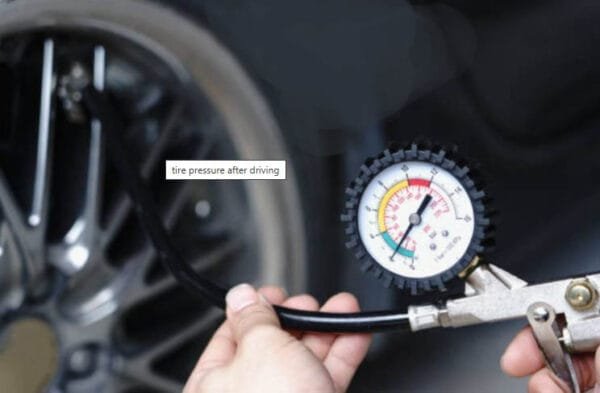
Even with a new car or TPMS (tire pressure monitoring system), it’s smart to know how to check tire pressure manually. Here’s how:
-
Use a quality tire pressure gauge (pen-type, dial, or digital).
-
Remove the cap from the tire valve stem.
-
Press the gauge firmly onto the valve until the hissing stops.
-
Read the PSI on the display.
-
Compare it to the recommended cold tire pressure.
✅ Tip: Always check your tire pressure before driving or at least three hours after parking for the most accurate reading.
FAQs About Tire Pressure
Q: Why is it important to check pressure when tires are cold?
A: Cold tire pressure provides a stable, consistent baseline. Heat from driving causes temporary inflation, which can lead to inaccurate readings if checked immediately after driving.
Q: How does temperature affect tire pressure?
A: Tire pressure drops about 1 PSI for every 10°F (5.6°C) decrease in temperature. That’s why your TPMS light might come on during the first cold morning of the season—even if everything was fine the day before.
Q: What should I do if my tire pressure seems high after driving?
A: Nothing. This increase is normal. Only adjust tire pressure when the tires are cold.
Final Thoughts
Tire pressure fluctuates naturally as you drive—but the only number you should worry about is the cold tire pressure recommended by your car’s manufacturer.
As long as your tires were inflated properly before hitting the road, the higher reading you see after driving is completely normal.
So next time you check your tire pressure after a long trip, don’t panic if the numbers are higher than expected—that just means your tires are doing their job.