The Buick Electra E7 arrives with a headline figure that is hard to ignore: a combined driving range of up to 1,600 km (around 995 miles). At a time when “range anxiety” still shapes much of the EV debate, Buick’s latest plug-in hybrid crossover makes a strong case that freedom from charging worries remains a powerful selling point—especially for late adopters.
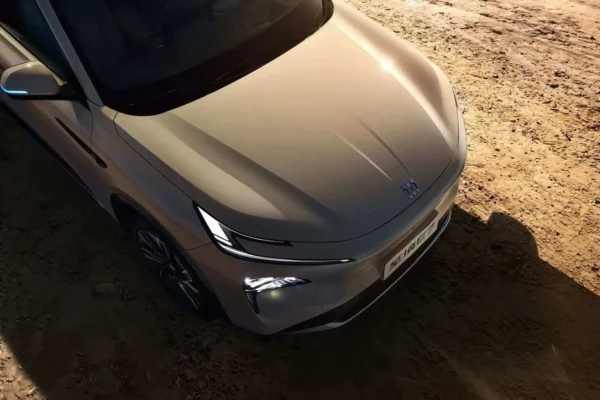
Developed under the SAIC-GM partnership, the Electra E7 uses the True Dragon Plug-in Hybrid Pro system. It pairs a high-efficiency 1.5-litre petrol engine acting primarily as a generator with a 165 kW (around 210 hp) electric motor and an LFP battery. Buick claims up to 210 km (130 miles) of pure electric range, enough to cover most daily driving before the combustion engine ever needs to step in.
In theory, a driver who plugs in overnight could complete almost all routine journeys on electricity alone, while still having the reassurance of long-distance capability without route planning. That duality is central to the E7’s appeal—but whether it translates equally well across global markets is another question.
United States: A Natural Fit for PHEV Thinking
In the US, the Electra E7’s philosophy aligns closely with prevailing consumer behavior. Long distances, inconsistent public charging coverage, and a cultural resistance to planning stops all work in favor of extended-range hybrids.
For American buyers still hesitant about full EVs, the E7 offers:
-
EV-like daily driving
-
No dependency on fast-charging networks
-
Familiar refuelling for long trips
That combination mirrors why PHEVs and EREVs continue to find traction in the US, even as pure EV adoption slows. From a market-fit perspective, the Electra E7 would arguably feel more intuitive to mainstream US buyers than a long-range BEV.
Canada: Practical, but Policy-Dependent
Canada sits somewhere between the US and Europe. Urban centers with strong charging infrastructure could support full EVs, but vast distances and cold climates still favor hybrids for many households.
The Electra E7’s long electric-only range would cover daily commutes even in winter, while the petrol backup reduces concerns about range loss in extreme cold. However, Canada’s policy environment increasingly favors zero-emission vehicles, and future incentives may prioritize BEVs over PHEVs. The E7 could work well in practice—but its long-term appeal would depend heavily on how regulations evolve.
Europe: A More Complicated Case
Europe presents the biggest challenge. While plug-in hybrids remain popular in some markets, regulatory pressure is steadily tightening around real-world emissions and electric-only usage. Cities with strict low-emission zones increasingly scrutinize how PHEVs are actually driven, not just what they promise on paper.
That said, the Electra E7’s 210 km electric range is far higher than most current PHEVs, potentially addressing criticism that many plug-ins rely too heavily on their combustion engines. Even so, its size, focus on extreme range, and US-style “one-stop” thinking may feel excessive in markets where shorter journeys and dense charging networks are the norm.
Beyond the Powertrain
The E7 also leans heavily into comfort and technology, with:
-
Advanced semi-autonomous ADAS based on the Momenta R6 learning model
-
Radar and LiDAR integrated into the roofline
-
A proactive, road-scanning active suspension system designed to smooth rough surfaces
These features reinforce the idea of the Electra E7 as a long-distance cruiser rather than a purely urban tool.
Perspective
The Buick Electra E7 raises a broader question about electrification strategy: is reducing range anxiety by maximizing range still the right answer, or does it risk reinforcing the idea that range is all that matters? In markets like the US, the E7’s approach makes intuitive sense. In Europe, it may feel like a transitional solution rather than a long-term one.
Ultimately, the Electra E7 looks less like a global one-size-fits-all product and more like a regional answer to regional anxieties. Whether that philosophy ages well will depend on how quickly charging infrastructure, regulation, and consumer habits continue to evolve.