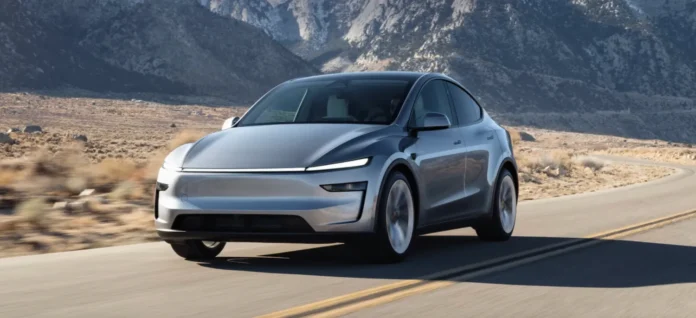
China has firmly established itself as a global automotive powerhouse, driven largely by its early and aggressive push into vehicle electrification. With global sales projections indicating that China is set to overtake Japan in total vehicle sales for the first time in 2025, the country is now focusing on consolidating its technological advantage rather than simply expanding volume.

To stay ahead of international competitors, leading domestic players such as BYD and CATL continue to accelerate development across a wide range of next-generation battery technologies. These include solid-state batteries, lithium iron phosphate (LFP), sodium-ion chemistry, and ultra-fast charging systems capable of replenishing EVs in as little as five minutes.
A National Framework for Solid-State Batteries
Following the introduction of China’s first national standard related to solid-state EV batteries earlier this week, regulators have now taken another significant step toward commercialisation.
China’s National Automotive Standardization Technical Committee has released a draft document titled “Solid-State Battery for Electric Vehicle – Part 1: Terms and Classification”, which is currently open for public consultation. The aim is to establish a clear, unified framework for defining and categorising solid-state battery technologies across the industry.

How the Draft Defines Batteries
The proposed standard classifies batteries primarily by how ions move within the cell, dividing them into:
-
Liquid batteries
-
Hybrid solid–liquid batteries
-
Solid-state batteries
Notably, the draft does not include the term “semi-solid-state,” a label that several Chinese manufacturers have previously used in marketing and technical discussions. Its absence suggests that this classification may be phased out in favour of more precise definitions.
The document then further categorises solid-state batteries by:
-
Electrolyte type: sulfide, oxide, composite, polymer, or halide
-
Conducting ion: lithium or sodium
-
Performance focus: high-energy or high-power
This structure is designed to reduce ambiguity and ensure consistency across research, development, and future regulatory approvals.
Why This Matters
By standardising terminology at a national level, China is laying the groundwork for faster industrial scaling and clearer regulatory pathways. It also helps align manufacturers, suppliers, and researchers around common definitions—an important step as solid-state technology moves closer to real-world deployment.
Perspective
From a neutral standpoint, this move does not signal an immediate breakthrough in solid-state battery production, but it does highlight China’s methodical approach to long-term leadership. Standardisation often precedes mass adoption, and by defining the rules early, China is positioning itself to commercialise solid-state batteries more quickly once the technology matures. In the broader global EV race, this reinforces China’s shift from rapid expansion to structural dominance through technology, regulation, and supply-chain control.