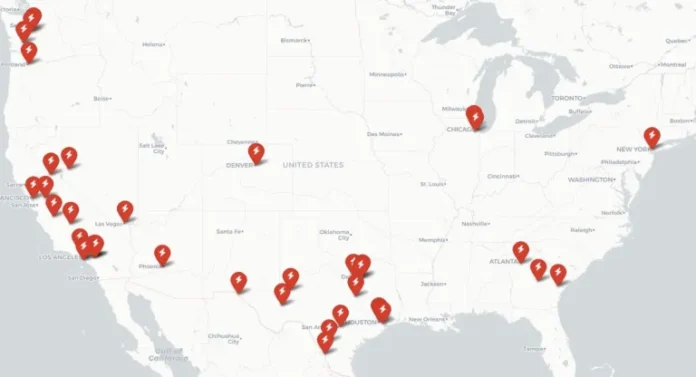
EVgo is making a clear bet on where EV charging in North America is headed. After a 2025 pilot that rolled out nearly 100 NACS connectors across 22 major metro areas, the company now plans to scale aggressively, with more than 500 NACS connectors expected to be installed by the end of this year at both existing stations and new sites.
The logic behind the move is hard to argue with. Tesla’s North American Charging Standard is quickly becoming the default. EVgo estimates that more than 80% of new EVs sold in the region will be NACS-compatible by 2030, with over 35 NACS-equipped models on US roads by the end of 2026. At this point, supporting NACS isn’t a differentiator—it’s table stakes.
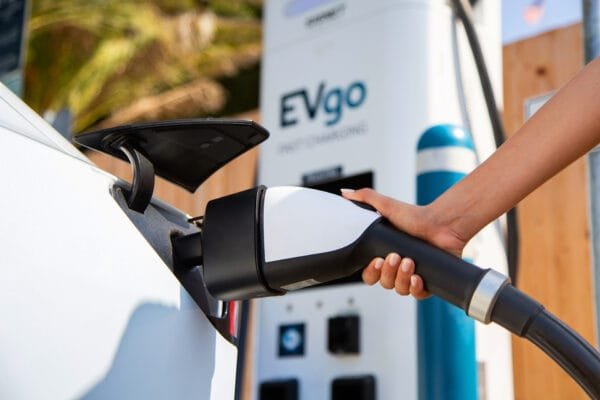
Still, drivers know that raw connector counts don’t tell the full story. What matters isn’t how many plugs exist on paper, but whether they reliably deliver power when you pull in. EVgo seems aware of that trap. Instead of flooding sites with dozens of stalls, the company says it will typically add NACS connectors in smaller clusters of two to four per location, then expand based on actual usage. That approach suggests a focus on throughput and uptime rather than chasing headline numbers.
This matters more than ever as Tesla drivers and non-Tesla drivers increasingly share the same fast-charging locations. Congestion, broken stalls, and inconsistent power delivery are what sour public perception—not connector standards.
For users, there are tangible benefits. NACS drivers can take advantage of EVgo’s Autocharge+ feature, which automatically starts charging sessions without tapping apps or cards. CCS drivers already use it, and extending that frictionless experience to NACS helps narrow the gap between public charging and Tesla’s famously simple ecosystem. EVgo also notes that its NACS hardware uses liquid-cooled cables tested for high-power charging, and that early data already shows higher NACS throughput.
My view is that EVgo’s strategy is directionally right—but execution will decide everything. Betting on NACS is no longer bold; it’s necessary. The real win will come if EVgo can prove that its NACS chargers are not just widespread, but dependable. In a charging landscape that’s finally converging on one standard, reliability is the only advantage that still matters.