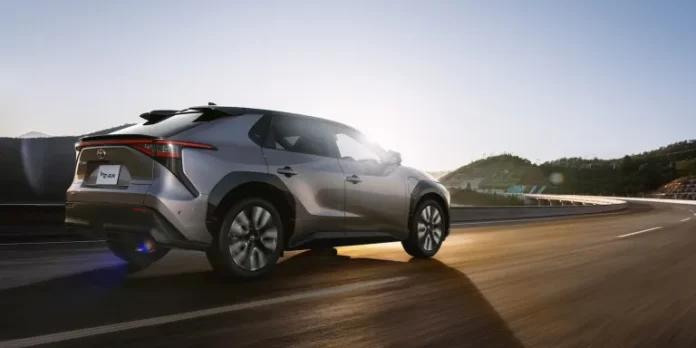
At CES 2026, Ford outlined a broad technology roadmap aimed at making advanced electric vehicles and driver-assistance systems more accessible to mainstream buyers. Central to that plan is a new midsize electric pickup, expected to launch in 2027 with a starting price of around $30,000, alongside a significant evolution of Ford’s BlueCruise system toward Level 3 (eyes-off) driving by 2028.

A Mainstream Electric Pickup
According to Ford, the first vehicle built on its upcoming Universal EV Platform will be a four-door midsize electric pickup designed to maximize interior and cargo usability. The company claims total passenger and storage space—including the frunk and bed—will exceed that of a Toyota RAV4, while performance is expected to match the acceleration of the Mustang EcoBoost.
Ford positions the platform as a key enabler for affordability, allowing electric vehicles with competitive range, space, and performance to reach lower price points than previous generations of EVs.
BlueCruise Moves Toward Level 3
Beyond hardware, Ford confirmed that BlueCruise, its hands-free driver-assistance system, is planned to support Level 3 eyes-off driving beginning in 2028. This would allow drivers to disengage from monitoring the road under specific conditions, a feature currently limited to a small number of premium vehicles and tightly regulated environments.
Ford says its confidence in the rollout is backed by scale: more than 1.2 million vehicles equipped with BlueCruise are already on the road, providing real-world data that continues to shape software updates and system refinement.
Doug Field, Ford’s chief EV, digital, and design officer, said developing key technologies in-house allows the company to deliver “significantly more capability at a 30% lower cost” than outsourced solutions. Field added that Ford’s goal is to make advanced in-vehicle experiences available to a broad audience rather than keeping them exclusive to high-end models.
AI Assistant and the “Vehicle Brain”
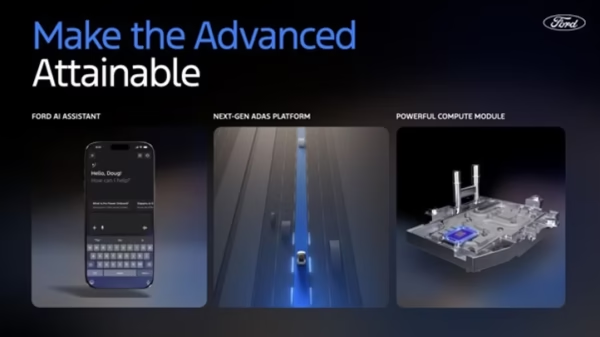
Ford also introduced a new AI Assistant, scheduled to launch in early 2026 through Ford and Lincoln smartphone apps, before expanding to in-vehicle use for up to 8 million drivers starting in 2027. The assistant is designed to understand vehicle capabilities and user context, helping simplify everyday decisions—such as estimating how much cargo will fit in the truck bed using a photo-based analysis.
Supporting these features is Ford’s newly unveiled High Performance Compute Center, an in-house computing module that consolidates infotainment, ADAS, audio, and networking into a single unit. According to Ford executives, this approach reduces module costs by 10–15%, improves processing speed, and frees up interior space thanks to its smaller physical footprint. The architecture also gives Ford greater control over critical semiconductors.
Perspective
Taken together, Ford’s announcements suggest a push to democratize technologies—such as autonomous driving and AI-assisted features—that have so far been largely confined to premium vehicles. The strategy hinges on execution: delivering promised affordability, regulatory approval for Level 3 driving, and real-world reliability at scale. If Ford can align all three, its $30,000 electric pickup could become more than just a new model—it could signal a broader shift in how advanced automotive technology reaches everyday buyers.