After nearly two decades on the road, Hyundai i10 has reached the end of its journey. Hyundai has officially ended production of its best-selling ICE-powered hatchback for the UK and European markets, closing the book on a model that quietly shaped urban mobility for millions of drivers.
Launched in 2008, the i10 arrived at the perfect moment. Affordable, compact, and increasingly well-equipped, it became a go-to city car—especially in the UK and Europe—where tight streets, rising fuel costs, and practicality matter more than outright performance. Over 18 years, Hyundai sold more than 3.3 million units globally, including over 370,000 in the UK alone. Few small cars can claim that kind of longevity.
Why the i10 had to go
Despite its success, time caught up with the i10. Sales have slowed as regulations tightened and buyers shifted toward electrified options and low-cost alternatives. According to Auto Express, while UK dealers still have inventory, Hyundai is no longer accepting factory orders—signaling a clean break rather than a slow fade.
But this isn’t just about declining demand. Ending i10 production also frees up manufacturing capacity at Hyundai’s Turkey plant for something new—and electric.
Enter the IONIQ 3
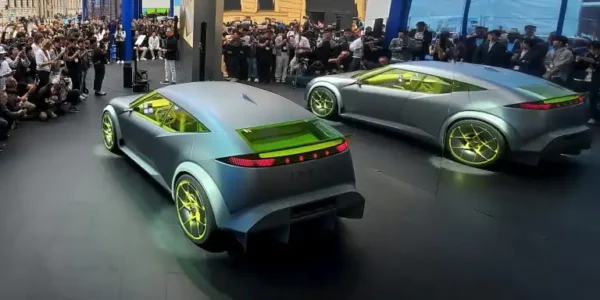
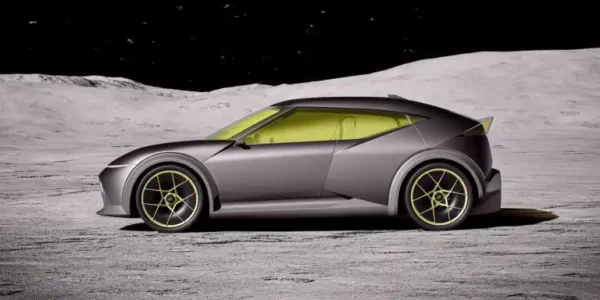
That “something new” is the Hyundai IONIQ 3, a compact EV previewed by the Concept Three at the Munich Motor Show. Unlike Hyundai’s more conventional IONIQ siblings, the IONIQ 3 adopts a bold “Aero Hatch” design—short, wide, and aerodynamic—described by Hyundai as a new typology for compact EVs.
Sized closer to the Volkswagen ID.3 and Kia EV3 than the outgoing i10, the IONIQ 3 represents not a direct replacement, but a step up in class and ambition. With an expected debut in April 2026 and pricing rumored around £25,000 ($33,700), it targets buyers ready to move from budget ICE cars into the EV mainstream.
Is this a true successor?
In emotional terms, no EV can fully replace what the i10 represented: a simple, affordable gateway to car ownership. At £18,350, the i10 served first-time buyers and cost-conscious households in a way modern EVs still struggle to match.
Hyundai seems to recognize that gap. Rather than positioning the IONIQ 3 as a spiritual successor, the brand is steering entry-level buyers toward the Hyundai Inster, which starts at £23,495 ($31,500) in the UK. It’s not as cheap as the i10—but in today’s market, it’s as close as it gets.
Market context: a wider shift
Hyundai isn’t alone. Across Europe, small ICE hatchbacks are disappearing as emissions rules tighten and development costs rise. EVs in this segment are larger, more expensive, and more technologically complex—but also safer, cleaner, and more future-proof.
Final outlook
The end of the i10 feels bittersweet, especially for drivers who valued its simplicity. But this isn’t abandonment—it’s evolution under pressure. The i10’s legacy lives on not through a like-for-like replacement, but through Hyundai’s broader shift toward electrification.
Whether buyers are ready—or able—to follow that shift remains the real question.