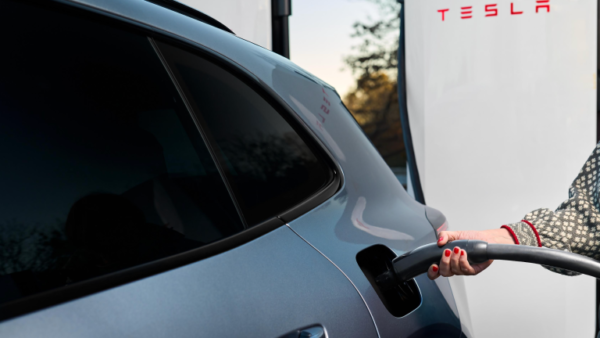
The future of EV charging has long promised simplicity: pull up, plug in, and drive away—no apps, no cards, no friction. That future just moved a big step closer. Porsche announced that owners of the Macan EV, the upcoming Cayenne EV, and 2026-and-newer Taycan models will be able to charge seamlessly on 27,500 Tesla Superchargers across North America—without using an app or credit card.
This is plug-and-charge done right, and it matters most in the U.S., where long distances and highway travel demand reliability and speed.
Why this matters for U.S. drivers
The U.S. charging experience has improved, but fragmentation remains a pain point. Different networks, payment systems, and authentication methods add friction—especially on road trips. By enabling automatic authentication and billing at Tesla’s Supercharger network, Porsche effectively gives its customers access to the most dense, reliable DC fast-charging footprint in the country.
For drivers, the benefits are immediate:
Faster stops: No fumbling with apps or terminals.
Predictable reliability: Superchargers are known for uptime.
Confidence on long trips: Particularly valuable across interstate corridors and rural stretches.
Porsche’s charging strategy: quiet leadership
This announcement isn’t an isolated move. Porsche has been ahead of the curve on seamless charging. The brand enabled early plug-and-charge at Electrify America, and more recently expanded roaming access through the Porsche Charging Service with ChargePoint via software updates.
The pattern is clear: Porsche isn’t betting on a single network. Instead, it’s building redundancy and convenience—a strategy that aligns with how Americans actually drive. Whether commuting, touring, or crossing states, drivers get more options with fewer headaches.
What changes day-to-day
For Macan EV and Taycan owners, charging becomes more like fueling used to be: stop where it’s convenient, plug in, and go. For the upcoming Cayenne EV—likely to be a road-trip favorite—this interoperability could be a deciding factor for buyers comparing premium electric SUVs.
It also nudges the broader ecosystem forward. As premium brands normalize plug-and-charge across networks, consumer expectations rise—and lagging networks will feel pressure to simplify.
Final outlook
Porsche’s Supercharger access isn’t about flashy tech; it’s about removing friction. In the U.S., where charging convenience can make or break EV ownership, this move delivers real, everyday value. If this momentum continues—across brands and networks—the long-promised “plug anywhere, pay automatically” future may finally arrive.