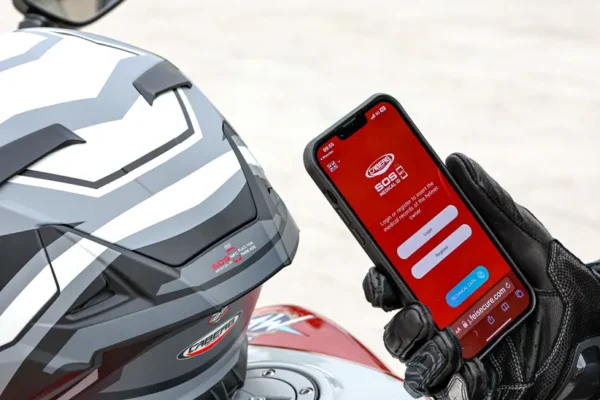
Italian helmet manufacturer Caberg has introduced SOS Medical ID, a microchip-based data system designed to be fully integrated into a motorcycle helmet. Developed at the company’s base in Bergamo, near Milan, the system uses NFC (Near Field Communication) technology to store and share a rider’s essential medical and personal information in emergencies.
The idea is simple: if a rider is involved in an accident and unable to communicate, first responders—or even bystanders—can tap an NFC-enabled smartphone against a designated area on the helmet to instantly access critical data. No app downloads, QR codes, or passwords are required. Information can include allergies, medical conditions, blood type, emergency contacts, and potentially the rider’s location. Since most modern smartphones support NFC, including all iPhones since the iPhone 6, accessibility is broad.
The Case for SOS Medical ID
From a safety perspective, the concept addresses a real problem. In serious motorcycle accidents, riders are often unconscious or disoriented. Quick access to medical information could help emergency services make better-informed decisions—particularly for riders with allergies, chronic conditions, or specific medication needs.
Unlike phone-based medical IDs, which may be locked or damaged in a crash, a helmet-integrated system remains attached to the rider and is clearly associated with them. It also avoids reliance on batteries, apps, or cellular connections, which can fail in critical moments.
For riders who tour long distances, ride alone, or have known medical conditions, the system could offer genuine peace of mind—not just for themselves, but for family members who want assurance that key information is readily available.
Is It Necessary for Everyone?
That said, SOS Medical ID may not be universally essential. Many riders already use smartphone medical ID features, wear medical alert bracelets, or ride primarily in urban areas with fast emergency response times. For healthy riders commuting short distances, the real-world benefit may feel marginal.
There’s also the human factor. The system only works if people at the scene know to look for it and are comfortable using it. While NFC is common, awareness among the general public and even some first responders may vary, especially outside Europe.
Privacy considerations also come into play. Although NFC requires close proximity, some riders may still be uneasy about storing personal medical data in a helmet—particularly if it’s accessed by anyone with a phone.
A Step Toward Smarter Safety
Viewed more broadly, SOS Medical ID reflects a growing trend toward passive, low-friction safety technology—tools that don’t require rider interaction but can make a difference when things go wrong. It’s not a replacement for protective gear or training, but an added layer that could be valuable in specific situations.
Perspective
SOS Medical ID isn’t a must-have for every rider, but it doesn’t need to be. Its value lies in offering an optional safety upgrade for those who want it—especially riders with medical considerations or those who travel far from home. As awareness grows and helmet technology becomes more integrated, systems like this may shift from niche to normal. Whether that happens will depend less on the tech itself and more on how clearly its benefits translate to everyday riding reality.