Toyota is expanding its electric lineup again in 2026, this time with a more rugged, outdoors-inspired option. The new Toyota bZ Woodland takes the standard bZ formula and pushes it toward adventure, adding more ground clearance, standard all-wheel drive, and practical off-road touches like all-terrain tires and a roof rack.
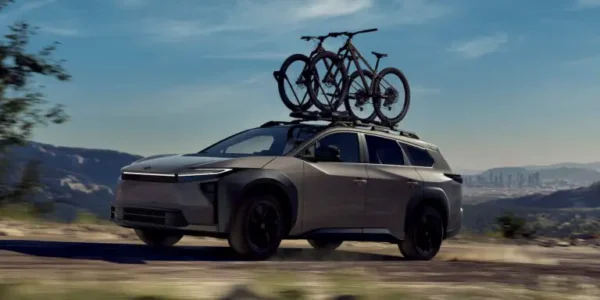
Visually and proportionally, the bZ Woodland is clearly positioned as a more “SUV-like” EV. It’s nearly six inches longer than the regular 2026 bZ, translating into roughly 30 cubic feet of additional cargo space. That extra length and height give it a more upright stance—something many buyers still associate with real utility, especially in North America.
Under the skin, the differences matter even more. Unlike the base bZ, which is focused on efficiency, the Woodland uses a dual-motor AWD setup producing 375 horsepower—about 37 hp more than the standard version. Ground clearance jumps to 8.3 inches, towing capacity reaches 3,500 pounds, and Toyota has clearly designed this EV with light off-road and outdoor lifestyles in mind. The trade-off is range. Despite sharing the same 74.7 kWh battery, expected range drops to around 260 miles, a reminder that power and capability still come at an efficiency cost.
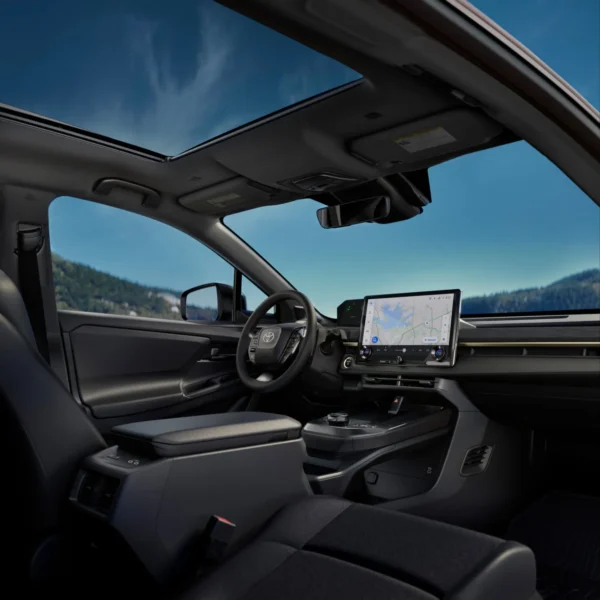
Toyota does score points on charging. The bZ Woodland includes a built-in NACS port, allowing access to Tesla’s Supercharger network, and Toyota claims 10–80% fast charging in about 30 minutes. Inside, the cabin mirrors the standard bZ, centered around a 14-inch touchscreen with Toyota Audio Multimedia, wireless Apple CarPlay, and Android Auto—functional, if not especially adventurous.
Where the conversation gets complicated is pricing. According to early reports, the bZ Woodland starts at $46,750, with the Premium trim pushing close to $49,000. That places it firmly in a competitive—and crowded—segment. Its closest cousin, the Subaru Trailseeker, which is essentially a rebadged version of the same vehicle, starts at roughly $41,445. That $5,000+ gap is hard to ignore, especially when Subaru already offers multiple trims and a reputation for standard AWD baked into its brand identity.
Looking at regional fit, the bZ Woodland makes the most sense in the US and Canada. Buyers there value AWD, towing ability, and SUV proportions, even if they rarely leave paved roads. In urban America, it’s less about rock crawling and more about winter traction, road presence, and lifestyle signaling. Canada’s colder climate also favors AWD EVs, though the 260-mile range may feel limiting on longer rural routes.
In Europe, the picture is less favorable. The bZ Woodland’s size, price, and relatively modest range make it a tougher sell in cities where efficiency and compact dimensions matter more than towing capacity. Australia sits somewhere in between: outdoor culture and long distances could appeal to some buyers, but charging infrastructure and pricing will heavily influence its success.
My view is that the bZ Woodland reflects Toyota’s cautious EV strategy. It’s not trying to reinvent electric SUVs, but to make them feel familiar to buyers who still think in terms of ground clearance and gear-hauling. The problem is value. At nearly $47,000, it risks being overshadowed by cheaper rivals—including its own Subaru twin. If Toyota can justify the price with features and real-world refinement, the bZ Woodland could find its audience. If not, it may feel like a well-intentioned EV caught between urban reality and outdoor aspiration.