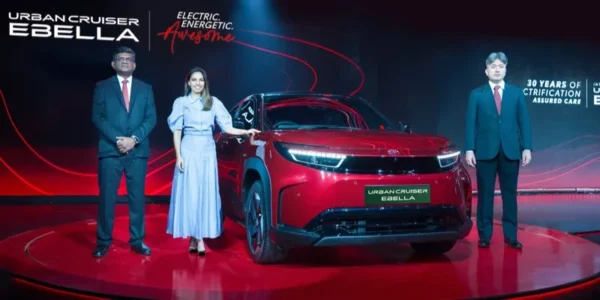
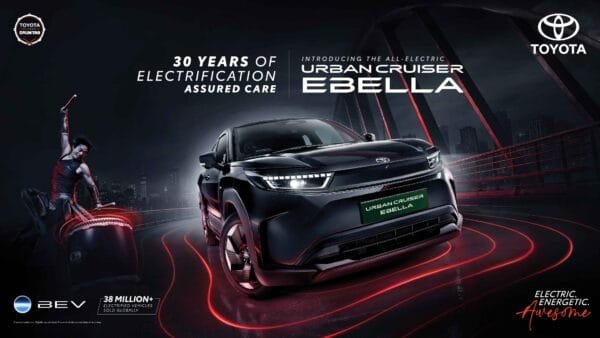
Toyota is stepping into unfamiliar territory with the Urban Cruiser Ebella, its first fully electric vehicle for India. Now open for orders, the midsize electric SUV promises an ARAI-certified range of up to 543 km (337 miles) and is expected to start at around ₹19 lakh ($21,000)—a price that places it squarely in the most competitive part of India’s fast-growing EV market.
After launching the Urban Cruiser EV in Europe last month, India becomes Toyota’s second major market for the model. That choice is no accident.
Why India—and why now?
India is emerging as a high-potential EV hub driven by scale, policy support, and local manufacturing. Domestic players like Tata Motors and Mahindra & Mahindra dominate thanks to locally built vehicles and incentives. Meanwhile, global leaders such as BYD and Tesla face steep import tariffs, limiting their reach.
Toyota is taking the proven local route. The Urban Cruiser Ebella is a close sibling of the Maruti Suzuki e-Vitara and will be built at Suzuki Motor’s Gujarat plant, keeping costs down and supply stable. For Toyota, India offers scale and learning—crucial as it accelerates its global EV strategy.
Powertrain and specs: practical, not flashy
The Urban Cruiser Ebella is offered with two LFP battery options—49 kWh and 61 kWh—prioritizing durability and cost over peak energy density. The standard pack delivers 106 kW (142 hp) and 189 Nm, while the larger battery increases output to 128 kW with the same torque. Power is sent to the front wheels only.
On paper, that’s not performance-led—but it’s aligned with Indian driving conditions, where efficiency, reliability, and range matter more than outright speed. Toyota claims over 500 km (310 miles) of real-world usability, which could ease range anxiety for families and commuters alike.
How it stacks up against rivals
At the expected price points, competition is fierce:
-
Hyundai Creta Electric: from ₹18.02 lakh, ~473 km ARAI
-
Tata Curvv EV: ~500+ km (variant-dependent)
-
MG ZS EV: ~461 km
-
Mahindra BE 6: more performance-focused, higher pricing
Toyota’s advantage lies in claimed range and brand trust, while rivals often win on entry pricing or performance. If real-world efficiency holds up, the Ebella could carve out a steady niche.
Interior and everyday usability
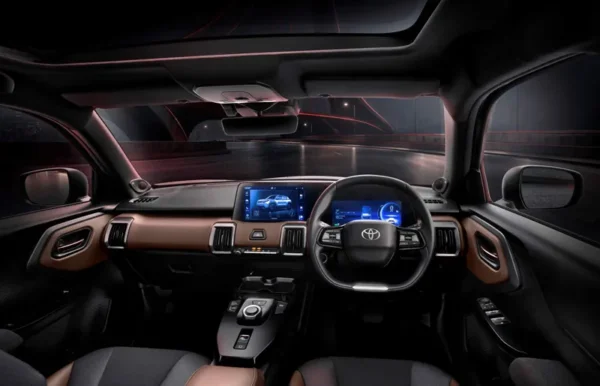
Inside, the Ebella follows Toyota’s latest design language with a 10.25-inch digital cluster, 10.1-inch infotainment screen, Apple CarPlay/Android Auto, and—importantly—physical buttons for core controls. With Toyota i-Connect, owners get remote charging, battery monitoring, and climate features—useful rather than flashy tech.
Final outlook
The Urban Cruiser Ebella isn’t meant to disrupt India’s EV market overnight. Instead, it’s a measured, pragmatic entry—locally built, sensibly priced, and range-focused. For Toyota, choosing India as the second market after Europe is about scale, learning, and long-term positioning. If pricing lands where expected and real-world range delivers, the Ebella could become a quiet success—and a foundation for Toyota’s broader EV ambitions in emerging markets.