The unveiling of Hyundai Motor Company’s new sensing technology, Vision Pulse, feels like a glimpse into how cars may soon “understand” their surroundings in a far more human way. At a time when the auto industry is rapidly shifting toward software-defined vehicles, Hyundai — alongside Kia and Genesis — is clearly betting that safety and intelligence will define the next phase of competition.
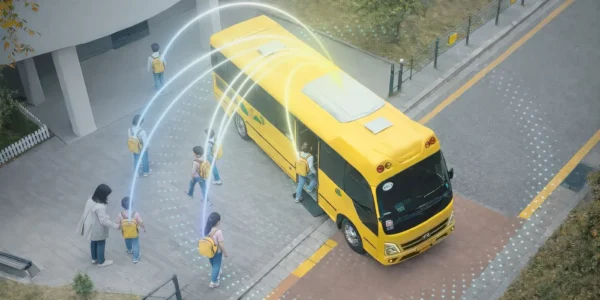
Rather than focusing purely on more cameras or more powerful hardware, Vision Pulse takes a different approach. The system uses ultra-wideband (UWB) radio waves to detect people and obstacles in real time, even in situations where traditional sensors struggle. Tight city streets, poor visibility, or crowded environments are exactly where this technology is meant to shine. According to Hyundai, the system can identify objects within a 100-meter radius with an accuracy of about 10 centimeters, while avoiding interference from other radio signals.
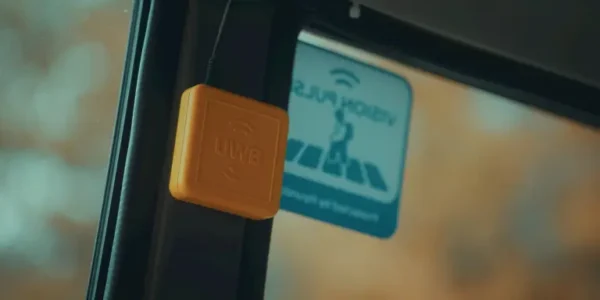
What makes Vision Pulse especially interesting is its ambition to reduce reliance on costly LiDAR and radar sensors. If Hyundai can truly deliver advanced safety features at a lower cost, this could help bring sophisticated driver-assistance technology to more affordable vehicles — not just premium models. That matters to everyday drivers, not just early adopters.
The demonstration video, tellingly titled “Sight beyond Seeing: Technology to See the Invisible,” frames Vision Pulse less as a flashy innovation and more as a quiet guardian. Scenes showing children boarding a school bus highlight the emotional core of the technology: preventing accidents before drivers even realize danger is present.
Beyond passenger cars, Hyundai is already testing Vision Pulse in real-world industrial settings, such as Kia’s PBV Conversion Center, where it helps prevent collisions between forklifts and workers. Its potential use in disaster response, including locating buried victims, hints at applications far beyond mobility.
In my view, Vision Pulse reflects Hyundai’s broader strategy: blending software, safety, and scalability. If it performs as promised, this technology could redefine how vehicles protect people — not by seeing better, but by sensing smarter.