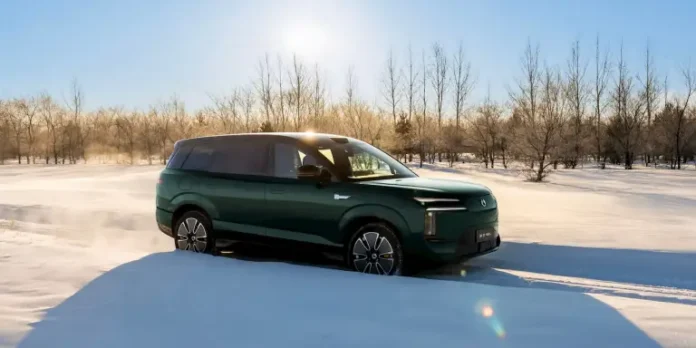
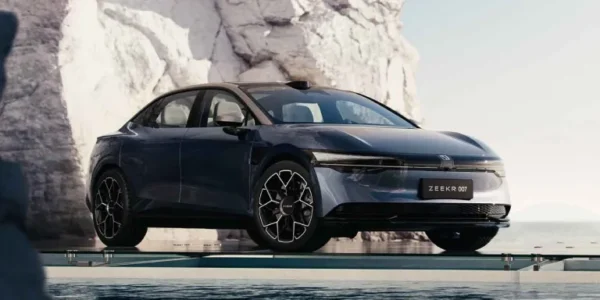
The ZEEKR brand, owned by Geely, has built a reputation for delivering fast, stylish, and tech-heavy electric vehicles, and the ZEEKR 007 is shaping up to be one of its most compelling offerings yet. For the 2026 model year, the 007 is set to receive meaningful upgrades, including a 900V electrical architecture and significantly enhanced driver-assistance hardware—changes that push it closer to the cutting edge of the global EV market.
Positioned somewhere between a shooting brake and a tall wagon, the ZEEKR 007 blends SUV practicality with sleek proportions. It’s already known for its premium interior, rapid acceleration, and high-end tech, such as OLED displays and an augmented reality head-up display (AR-HUD) that projects navigation, vehicle data, and infotainment directly into the driver’s line of sight.
What’s new for 2026: power, charging, and AI
According to reports, the biggest upgrade for 2026 is the move to a 900V high-voltage system. This brings two major benefits:
Faster DC fast charging, especially on high-power chargers
Higher peak power output, improving sustained performance
Underpinning the new system is an upgraded compute platform based on Nvidia’s Drive Thor-U chip, delivering 700 TOPS of AI processing power, up from 508. This hardware supports Geely’s new G-ASD assisted driving system, unveiled at CES.
Unlike flashy “robotaxi” promises, G-ASD is positioned as a practical, real-world driver assist system. By fusing data from cameras, radar, lidar, navigation maps, and driver-monitoring sensors in real time, it aims to deliver smoother lane changes, better handling of edge cases, and—critically—a system that can improve via software updates rather than plateau at launch.
Battery, range, and performance
The ZEEKR 007’s specs are strong on paper:
75 kWh LFP battery: up to 688 km (425 miles) CLTC
100 kWh NMC battery (optional): up to 870 km (540 miles) CLTC
Maximum output: 475 kW (~640 hp)
0–60 mph: ~4.0 seconds
Price in China: ~$30,000–$43,000 USD equivalent
Even after adjusting for more conservative EPA or WLTP testing cycles, range would remain competitive with premium EVs sold in Western markets.
Would it fit the U.S., Canada, and Europe?
United States: The 007’s performance, range, and tech would appeal strongly to U.S. buyers—especially those considering Tesla Model Y Performance or premium crossovers. The main barriers would be brand recognition, dealer/service networks, and tariffs.
Canada: Canada’s colder climate favors EVs with strong thermal management and long range—areas where the 007’s battery options and 900V system could shine. Pricing would be critical, but interest in tech-forward EVs is growing.
Europe: The shooting-brake-like design is arguably most at home in Europe, where wagons remain popular. Advanced ADAS and premium interiors align well with European expectations, though regulatory approvals would take time.
Final outlook
On paper, the 2026 ZEEKR 007 looks more than ready for global competition. Its blend of high-voltage charging, serious performance, and AI-driven driver assistance puts it squarely in the premium EV conversation. Whether it succeeds outside China won’t depend on specs alone—but on how quickly ZEEKR can build trust, infrastructure, and compliance in Western markets. If it clears those hurdles, the 007 could be a genuine disruptor rather than just another impressive spec sheet.