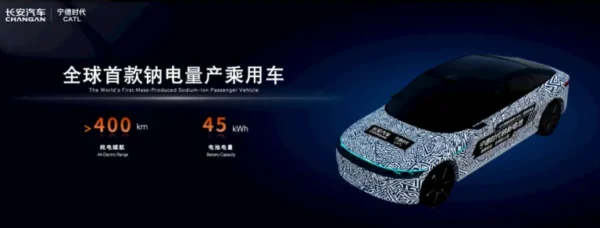
Global battery giant CATL and Changan Automobile have just crossed a milestone many in the industry thought was still years away. Together, they’ve unveiled what they call the world’s first mass-produced passenger EV powered by a sodium-ion battery, marking a significant shift in how electric vehicles may be powered going forward.
The debut vehicle is the Changan Nevo A06 (also known as the Qiyuan A06), but this is clearly bigger than a single model. CATL confirmed it will supply sodium-ion batteries across Changan’s entire lineup, including Qiyuan, Deepal, Avatr, and Uni—signaling real commercial intent rather than a one-off tech demo.
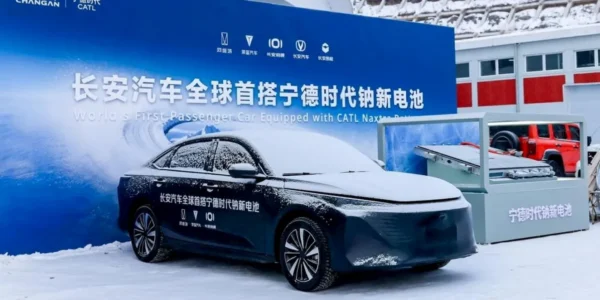
CATL’s sodium-ion “Naxtra” batteries now reach up to 175 Wh/kg, putting them surprisingly close to lithium iron phosphate (LFP) packs. The initial 45 kWh battery delivers around 400 km of range, with CATL expecting future versions to stretch to 500–600 km as the chemistry matures.
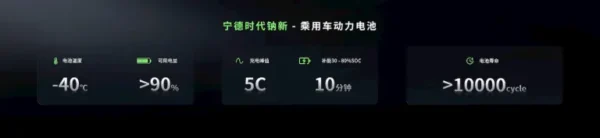
Where sodium-ion truly shines, however, is resilience. CATL says the batteries can charge at –30°C and still retain 90% usable capacity at –40°C—a clear advantage over lithium-based batteries in extreme cold. Add improved safety, lower flammability, and reduced exposure to volatile lithium prices, and the appeal becomes obvious.
With lithium carbonate prices having surged dramatically over the past few years, sodium offers a cheaper and more stable alternative. Industry momentum is building fast: sodium-ion battery shipments jumped 150% in 2025, and CATL expects 2026 to be the real inflection point for passenger EV adoption.
Final take: Sodium-ion batteries won’t replace lithium overnight—but this launch proves they’re no longer experimental. If CATL delivers on scale and cost, sodium-ion tech could become the quiet backbone of the next EV wave, especially in cold climates and price-sensitive markets.