Waymo has officially begun running its 6th-generation Driver without safety drivers on public roads — a milestone that signals more than just a technical upgrade. It marks the beginning of fully autonomous operations powered by Waymo’s most cost-efficient hardware stack yet.
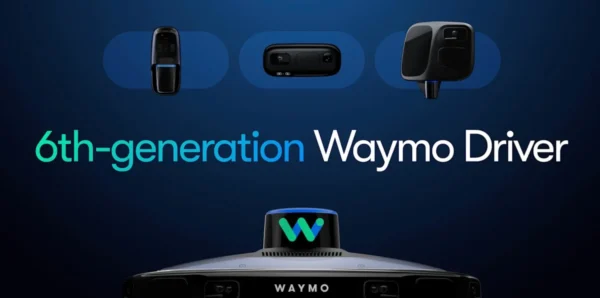
The 6th-gen system dramatically reduces sensor count — fewer cameras, lidars, and radars — while claiming better resolution and range. A 17-megapixel primary camera, upgraded lidar with custom chips, and modular weather-resistant components reflect seven years of real-world iteration. Importantly, the new stack is estimated to cost under $20,000 per unit, cutting hardware expense by more than half compared to the previous generation. That’s not incremental progress; that’s industrial scaling logic.
Waymo’s strategy has also evolved beyond a single vehicle platform. The Driver now runs on both the Zeekr-built Ojai robotaxi and the Hyundai IONIQ 5, with large-scale production ramping in Arizona. This diversified supply chain approach contrasts sharply with competitors still tied to single-platform experiments.
Operationally, the expansion is accelerating. Fully driverless service is now live in six U.S. cities, with more planned for 2026, alongside international launches in London and Tokyo. With roughly 2,500 vehicles today and weekly rides approaching 400,000, Waymo’s trajectory is beginning to resemble infrastructure deployment rather than tech beta testing.
Safety remains its strongest argument. Reporting significantly fewer serious crashes than human drivers across over 100 million miles, Waymo has built a regulatory track record few rivals can match.
My view? The 6th-gen rollout isn’t just a hardware refresh — it’s a declaration that autonomous driving is entering its industrial phase. The race now shifts from proving autonomy works to proving it can scale reliably, safely, and profitably.