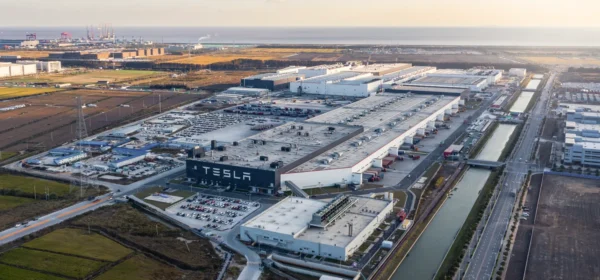
Tesla’s January numbers in China are difficult to ignore. Domestic retail sales fell 45% year-over-year to just 18,485 units — the weakest monthly figure since late 2022. While wholesale output from Giga Shanghai rose 9.3% year-over-year to 69,129 vehicles, nearly three-quarters of that production was exported. Only a fraction stayed in China.
On paper, exports look impressive. But when 73% of output leaves the country — compared to roughly 44–47% in prior Januarys — it signals that local demand is soft. Tesla is increasingly using Shanghai as a global export hub rather than a growth engine for China itself.
Some seasonal factors played a role. December saw a massive pull-forward effect ahead of the reinstated 5% NEV purchase tax. Trade-in subsidies expired in many cities. And China’s overall NEV market declined 20% year-over-year in January.
But those explanations don’t fully account for Tesla’s scale of drop. Even in a weak month, BYD delivered over 210,000 NEVs. Meanwhile, competitors like Xiaomi are gaining traction, with the SU7 outselling Tesla’s Model 3 and the YU7 challenging the Model Y.
The structural issue seems deeper. Tesla is competing with essentially two aging models in the world’s most dynamic EV market. Chinese brands iterate rapidly, integrate local digital ecosystems, and aggressively price their vehicles. Financing incentives and subsidies may cushion the fall, but they don’t reset product momentum.
My view? This isn’t a collapse in Tesla’s global position — exports remain strong — but it is a warning sign in China. Without faster product refresh cycles, deeper localization, or a new mass-market offering, Tesla risks becoming an export manufacturer in China rather than a domestic leader. In a market that moves this fast, standing still is effectively moving backward.