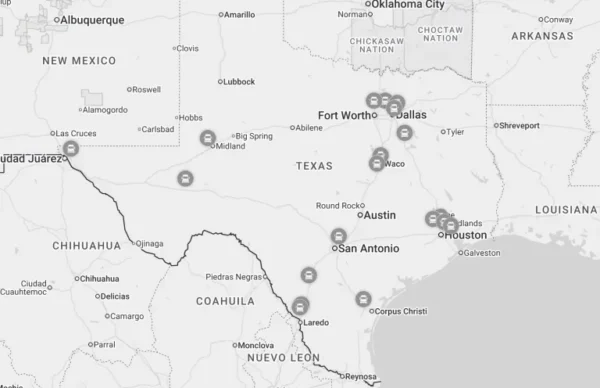
Tesla has quietly taken a major step toward making the Tesla Semi viable at scale. The company updated its “Find Us” map to show 64 new Megacharger locations across 15 US states. Combined with two already operational sites, that brings the visible network plan to 66 total heavy-duty charging stations.
The geographic layout reveals clear strategic intent. Texas leads with 19 planned sites, followed by California with 17 — aligning directly with major freight corridors like Interstate 5 and Interstate 10. These are among the busiest trucking routes in North America and already host early Semi operators such as PepsiCo. Expansion into Florida, Georgia, Illinois, and Washington suggests Tesla is targeting I-95, I-75, and key Midwest logistics hubs next.
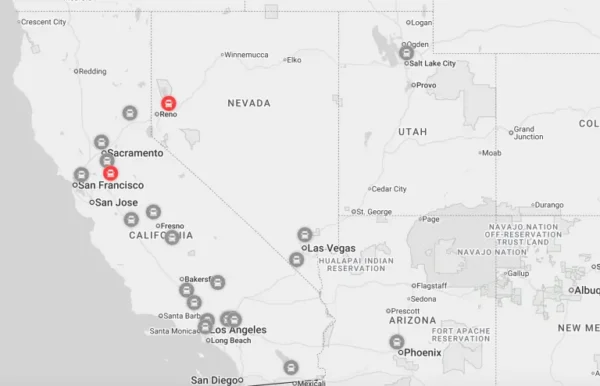
The two operational sites — one at Giga Nevada in Sparks and another near the Port of Long Beach in Carson, California — serve as early proof points. The Carson location, with up to 12 truck-capable stalls, shows Tesla is designing for real-world fleet density, not symbolic installations.
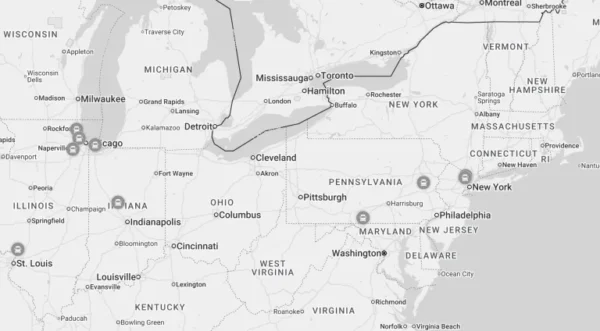
The charging hardware itself isn’t the bottleneck. Tesla has demonstrated 1.2 MW peak charging, enough to recover roughly 300 miles of range in 30 minutes — a crucial benchmark for aligning with federally mandated driver rest periods. Both the 325-mile Standard Range and 500-mile Long Range Semi support Megawatt Charging System (MCS 3.2).
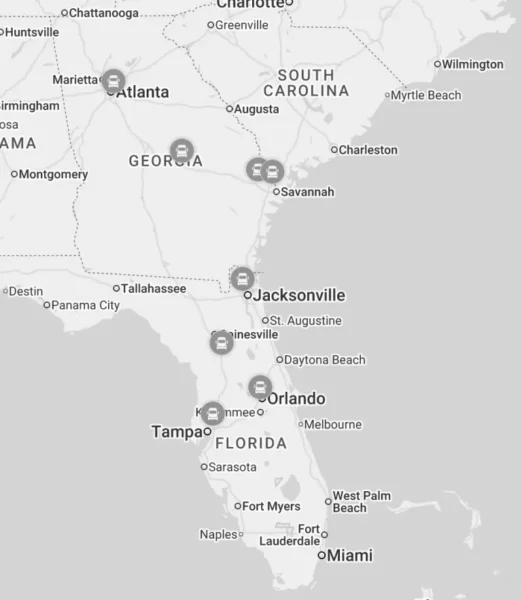
What remains uncertain is timing. All 64 new sites are labeled “coming soon,” without specific go-live dates. Tesla has previously stated a goal of deploying 46 stations by early 2027, with construction at select Pilot Travel Centers locations beginning in 2026.
The broader significance is clear: electric Class 8 trucking cannot scale without corridor-level infrastructure. By mapping out national coverage before full fleet production ramps, Tesla is signaling confidence in its long-haul ambitions.
My view? The Semi’s success won’t hinge on acceleration figures or range claims — it will depend on reliable megawatt charging along predictable freight routes. If Tesla delivers even half of what this map outlines, electric long-haul trucking moves from concept to credible alternative.