After years of hesitation, Toyota is finally finding its footing in the US EV market. January sales data suggests the refreshed Toyota bZ has become one of the best-selling electric vehicles in the country, even outpacing the Hyundai IONIQ 5 — a model long viewed as one of the segment’s benchmarks.
This momentum didn’t come out of nowhere. Toyota’s first attempt at a mass-market EV, the bZ4X, was widely criticized for limited range, slow charging, and an interior that didn’t feel competitive. With the 2026 bZ, Toyota addressed exactly those weak points. Range is now up to 314 miles, charging is faster and more predictable thanks to preconditioning, and the addition of a native NACS port gives drivers access to Tesla’s Supercharger network — a major confidence booster for first-time EV buyers.
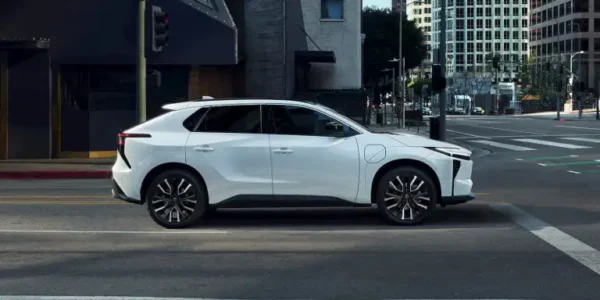
Price plays a huge role, too. Starting at $34,900 — and dipping below $30,000 with current incentives — the bZ undercuts many rivals while offering specs that are “good enough” for most households. Compared with similarly priced competitors, the bZ delivers strong range, competitive performance, and a roomy interior without forcing buyers into higher trims. That value equation matters, especially as EV shoppers become more cost-sensitive.
Brand trust is another key factor. Toyota doesn’t need to convince buyers that it knows how to build reliable cars — it just needs to prove it can build a competent EV. For many consumers, especially those moving from a Corolla, RAV4, or Camry, the bZ feels like a safer bet than switching to a newer EV-only brand. That familiarity lowers the psychological barrier to going electric.
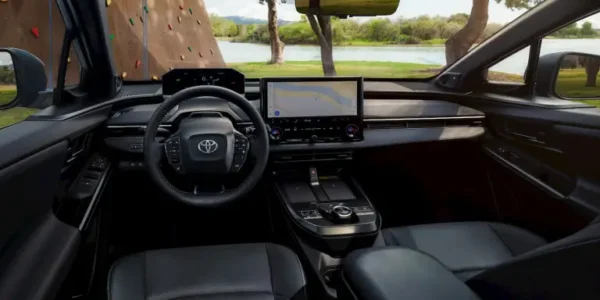
Quality and execution also count. The updated interior, larger 14-inch touchscreen, improved performance, and smoother overall driving experience make the bZ feel like a complete product rather than an early experiment. In contrast, some rivals lead on technology or design but come at higher prices or with trade-offs in availability and dealer support.
It’s also telling that the bZ is gaining traction beyond the US. Strong results in Japan and record growth in Canada suggest Toyota’s EV improvements are resonating globally, not just in one market.
In my view, the bZ’s early success isn’t about Toyota suddenly becoming an EV leader — it’s about competence. By delivering solid range, reasonable pricing, and the reassurance of a trusted brand, Toyota has built an EV that feels easy to live with. That may not grab headlines like cutting-edge tech, but for mass adoption, it’s often exactly what buyers are looking for.