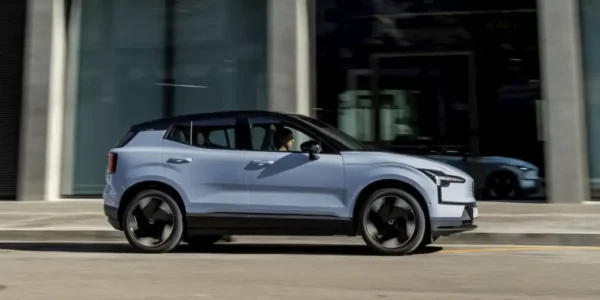
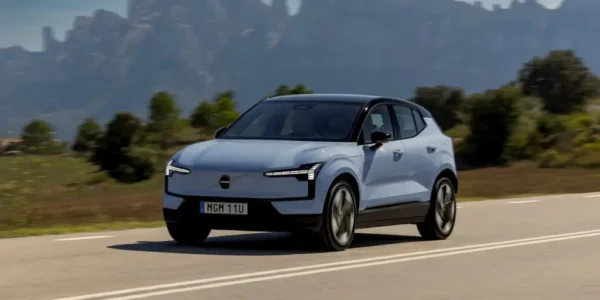
Volvo is recalling more than 40,000 units of its all-electric Volvo EX30 due to a potential battery overheating issue that could increase the risk of fire. The recall affects 40,323 Single-Motor Extended Range and Twin-Motor Performance models globally, with at least 40 vehicles impacted in the United States.
According to statements filed with the National Highway Traffic Safety Administration (NHTSA), a high-voltage battery module may short-circuit and overheat under certain conditions. While no widespread incidents have been reported publicly, Volvo is taking precautionary action by replacing affected battery modules free of charge.
In the meantime, the company is urging owners to park their vehicles outside and limit charging to 70% until repairs are completed. That temporary guidance reflects the industry’s broader caution around lithium battery thermal management — especially in newer EV platforms.
The battery cells involved were supplied through Volvo’s parent company, Geely, via its joint venture Shandong Geely Sunwoda Power Battery Co. Volvo says the supplier has since corrected the issue and will provide updated battery modules.
Financially, the recall could cost Volvo around $195 million, according to Reuters estimates. But the reputational stakes may be higher. Volvo has long built its brand around safety leadership. Battery-related recalls, even proactive ones, test consumer confidence in a market where EV fire risks are closely scrutinized.
If Volvo executes the repair efficiently and transparently, the long-term impact may be limited. But in the EV era, battery reliability is not just a technical issue — it’s central to brand trust.