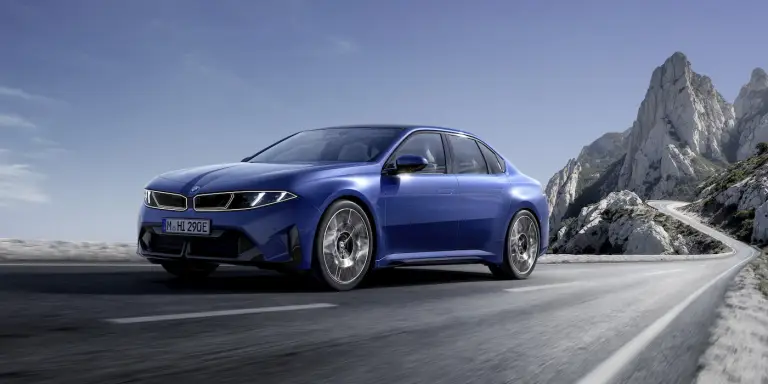
BMW has officially unveiled the new BMW i3, marking a major turning point in its electric vehicle strategy. As the second model built on the Neue Klasse platform — following the iX3 — this midsize electric sedan is being positioned as one of the most important cars in BMW’s modern history.
A True Generational Shift
Unlike the quirky original i3, this new version aligns closely with the traditional 3 Series formula, but with a fully electric foundation. BMW calls it a “technological quantum leap,” and on paper, the numbers back that up.
Built on a new 800V architecture, the i3 promises:
-
Up to 440 miles (EPA) range
-
Up to 900 km (WLTP)
-
400 kW fast charging, adding ~250 miles in 10 minutes
-
Bidirectional charging capability
Compared to BMW’s previous EV generation, range and charging speeds have improved by roughly 30%, placing the i3 among the most advanced EVs in its class.
Performance Meets Intelligence
The i3 50 xDrive variant features dual motors producing 463 hp and 476 lb-ft of torque, delivering the kind of performance expected from a modern BMW. But the real innovation lies under the surface.
BMW introduces four onboard “supercomputers,” increasing processing power by 20% and enabling faster responses for driving dynamics, safety systems, and infotainment.
Inside, the cabin reflects a clean, futuristic approach with a 17.9-inch central display, the new Panoramic Vision head-up display, and a redesigned steering wheel focused on usability.

Competing in a Rapidly Evolving Segment
The new i3 will enter a highly competitive space, facing off against models like the Tesla Model 3, upcoming electric sedans from Mercedes-Benz, and other premium EVs.
Compared to the Tesla Model 3, the i3 appears to offer:
-
Longer range (on paper)
-
Faster peak charging (400 kW vs lower real-world rates)
-
A more premium interior experience
However, Tesla still holds advantages in software, ecosystem integration, and pricing efficiency.

A More Practical BMW EV
One of the biggest changes is philosophical. The original i3 was experimental and niche. The new i3 is clearly designed to be mainstream, blending familiar design with cutting-edge technology.
Pricing is expected to start between $50,000 and $55,000, positioning it directly in the premium midsize EV segment — slightly above mass-market options but competitive for a luxury offering.
Final Thoughts
The new BMW i3 represents more than just a new model — it’s a reset of BMW’s EV strategy. Instead of experimenting, BMW is now focusing on delivering a well-rounded product that excels in the areas that matter most: range, charging, and everyday usability.
In my view, the i3 has the potential to become a serious contender in the premium EV sedan market. However, success will depend on real-world performance, pricing, and software experience — areas where competition, especially from Tesla, remains fierce. If BMW delivers on its promises, the i3 could mark the beginning of a true comeback in the electric era.