Honda’s upcoming WN7 electric motorcycle may have earned a prestigious iF Design Award, but the more important story is what it signals for the future of electric bikes from traditional manufacturers. Instead of chasing radical design or gimmicks, Honda appears to be focusing on something far more practical: building an electric motorcycle that feels normal to ride and easy to live with.
Design Philosophy: Familiar First, Electric Second
One of the biggest challenges for electric motorcycles has been identity. Some brands lean heavily into futuristic styling, while others try too hard to imitate petrol bikes. The WN7 takes a more balanced approach.
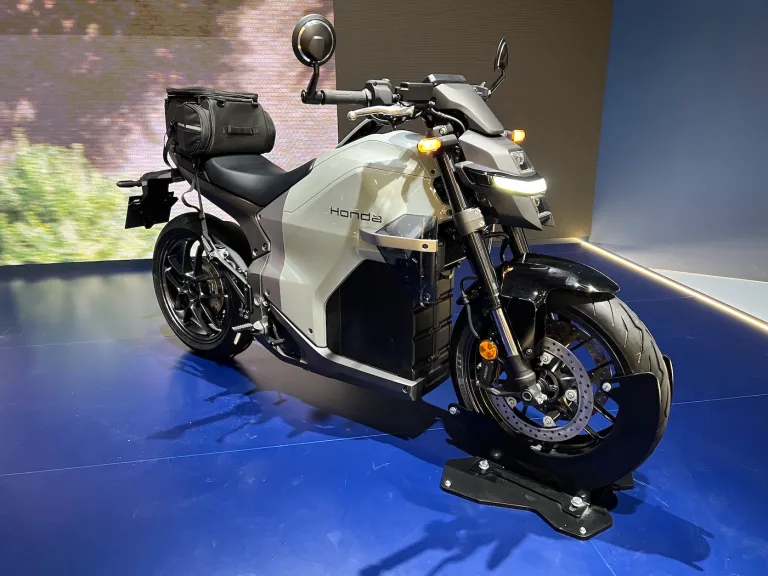
At first glance, it resembles a conventional naked bike, similar in proportion to Honda’s CB series. The riding stance, frame geometry, and overall silhouette feel familiar. But underneath, the engineering is clearly different.
The most notable feature is its frameless architecture, where the battery acts as a structural component. This approach:
- Reduces overall weight
- Simplifies chassis design
- Centralizes mass for better handling
Rather than hiding the battery, Honda integrates it into the core of the bike. It’s a clean and honest solution that avoids unnecessary styling tricks.
Performance and Real-World Usability
The WN7 sits firmly in the middleweight category:
- Power: ~50 kW (67 hp)
- Torque: ~100 Nm
- Battery: 9.3 kWh lithium-ion
From a riding perspective, this places it in a practical sweet spot. It’s not designed to compete with high-performance electric bikes, but it offers enough power for:
- Urban commuting
- Weekend rides
- Occasional spirited acceleration
The torque delivery, typical of electric motors, should feel immediate and smooth, making it accessible even for less experienced riders.
Charging and Range
- CCS fast charging (20–80% in ~30 minutes)
- Estimated range: 130–140 km (urban conditions)
These figures suggest Honda is prioritizing daily usability over headline numbers. While the range is not exceptional, it aligns with real-world commuting needs.
Technical Perspective: A Conservative but Smart Approach
From a technical standpoint, Honda is not trying to break records. Instead, it focuses on:
- Efficient packaging
- Balanced performance
- Reliable charging infrastructure compatibility
The use of CCS fast charging is particularly important, as it aligns with existing EV infrastructure, making ownership more practical.
Compared to some competitors that overpromise on specs, the WN7 feels engineered for consistency and reliability rather than extremes.
Price Comparison Within the Segment
At around $17,000 (estimated Europe pricing), the WN7 sits in a competitive but challenging position.
| Model | Price | Power | Range | Positioning |
|---|---|---|---|---|
| Honda WN7 | ~$17,000 | 67 hp | ~130 km | Balanced, practical |
| Zero SR/F | ~$20,000 | 110 hp | ~200+ km | Performance-focused |
| LiveWire One | ~$22,000 | 105 hp | ~235 km | Premium electric |
| Super Soco TC Max | ~$5,000 | Low | ~100 km | Entry-level |
Evaluation:
- More affordable than premium electric motorcycles
- More expensive than entry-level options
- Positioned as a mid-tier, mainstream EV bike
However, the price remains a barrier, especially considering its moderate range.
Strengths and Weaknesses
Strengths:
- Clean, practical design approach
- Familiar riding experience
- Balanced performance for daily use
- CCS fast charging support
Weaknesses:
- Limited range compared to premium rivals
- Pricing still relatively high
- Lacks standout performance to justify cost
Personal Take: Why the WN7 Matters
What stands out about the WN7 is not its specifications, but its philosophy.
It feels like Honda is finally treating electric motorcycles not as experimental products, but as normal motorcycles powered differently. That shift matters. Many riders don’t want something radically new—they want something familiar that simply works.
At the same time, the price highlights an ongoing challenge. Electric motorcycles still struggle to match the value proposition of traditional petrol bikes in the same segment.
Conclusion: A Step Forward, Not a Breakthrough
The Honda WN7 is not revolutionary, and that may be its biggest strength.
It offers a realistic vision of what mainstream electric motorcycles could become: practical, familiar, and usable in everyday life. However, pricing and range remain key obstacles that will determine whether it succeeds beyond early adopters.
Final verdict: The WN7 is a meaningful step toward normalizing electric motorcycles, but until costs come down, it will remain a promising option rather than a mass-market solution.