Lexus has quietly discontinued the Lexus UX 300e, marking the end of its first fully electric vehicle. Introduced in Europe and China in 2020 and later in Japan in 2021, the UX 300e represented Lexus’s initial step into the battery-electric era. However, after several years of limited sales and increasing competition, the model has now been officially removed from the brand’s lineup.
The decision did not come as a complete surprise. In markets such as the United Kingdom, fewer than 3,400 units were sold since its launch, a relatively modest figure in a rapidly expanding EV market. While the UX 300e carried the brand’s reputation for reliability and build quality, it struggled to keep pace with the technological advancements seen across the electric vehicle industry.
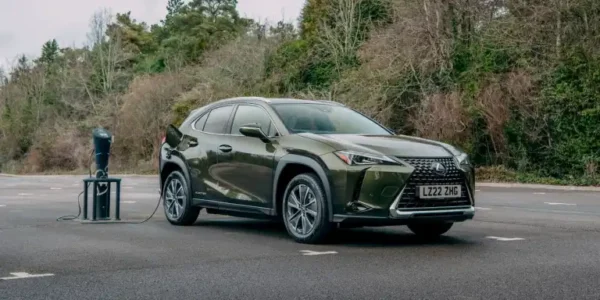
One of the biggest challenges was its specifications. Powered by a 54.3 kWh battery, the UX 300e offered a WLTP range of around 186 miles — a figure that quickly began to look outdated as competitors pushed well beyond 300 miles. The vehicle also relied on the CHAdeMO charging standard, which has gradually been phased out in many regions in favor of faster and more widely supported charging systems.
As a result, the UX 300e found itself overshadowed by newer electric SUVs such as the Tesla Model Y, the Hyundai IONIQ 5, and the Kia EV6. These rivals not only offered longer range but also faster charging, more advanced software ecosystems, and stronger performance figures.
For now, the Lexus RZ remains the only fully electric model in Lexus’s lineup. However, the brand is preparing a broader EV strategy that could significantly reshape its position in the market. Later this year, Lexus will introduce the all-electric version of the Lexus ES for the first time. The 2026 ES EV will arrive in two configurations: the front-wheel-drive ES 350e and the all-wheel-drive ES 500e.
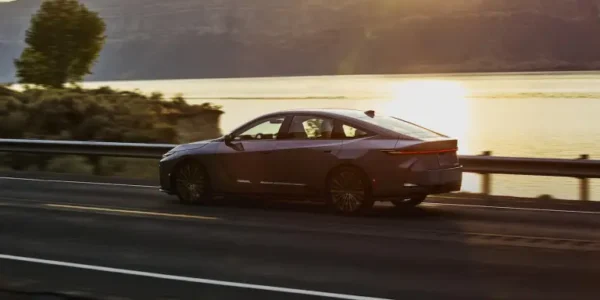
Early estimates suggest the ES 350e could deliver around 300 miles of driving range in the United States, while the more powerful ES 500e may offer roughly 250 miles. On the WLTP scale used in Europe, the ES 350e is expected to reach up to 426 miles, placing it much closer to modern EV benchmarks.
Meanwhile, Lexus has also refreshed the 2026 RZ electric SUV with improved range, updated technology, and a new F Sport performance trim. These changes suggest the company is gradually refining its electric platform rather than abandoning it.
Beyond Lexus itself, Toyota Motor Corporation is accelerating its EV plans. In the United States, Toyota is preparing to introduce several electric SUVs, including a three-row Highlander EV expected by the end of 2026. In Europe, the lineup will expand with models such as the updated bZ4X, C-HR+, and Urban Cruiser electric SUVs.
In many ways, the UX 300e can be seen as a transitional model — a cautious first attempt rather than a fully competitive product. While it may not have achieved major commercial success, it provided valuable experience as Lexus begins building a more modern EV portfolio.
In my view, discontinuing the UX 300e is less a setback and more a strategic reset. The electric vehicle market is evolving rapidly, and early-generation EVs often struggle to remain competitive as technology advances. What matters now is whether Lexus can deliver its next wave of electric models with the performance, range, and software sophistication needed to compete with leading EV brands worldwide.