
The upcoming electric Range Rover Velar doesn’t just feel like an upgrade—it feels like a complete reset. From early sightings and recent spy shots, it’s clear that this isn’t simply the current Velar with a battery pack. Instead, Land Rover appears to be reimagining what the Velar should be in an electric world.
Traditionally, the Velar has been the “design-forward” model in the Range Rover lineup—sleek, minimal, and modern. But the new Velar EV seems ready to push that identity even further. The shift toward a fastback-like silhouette signals a major departure from the boxy, upright SUV proportions we’re used to. In fact, it now resembles something closer to a coupe-SUV, drawing comparisons to the Jaguar Type 00 concept or even the Polestar 4.
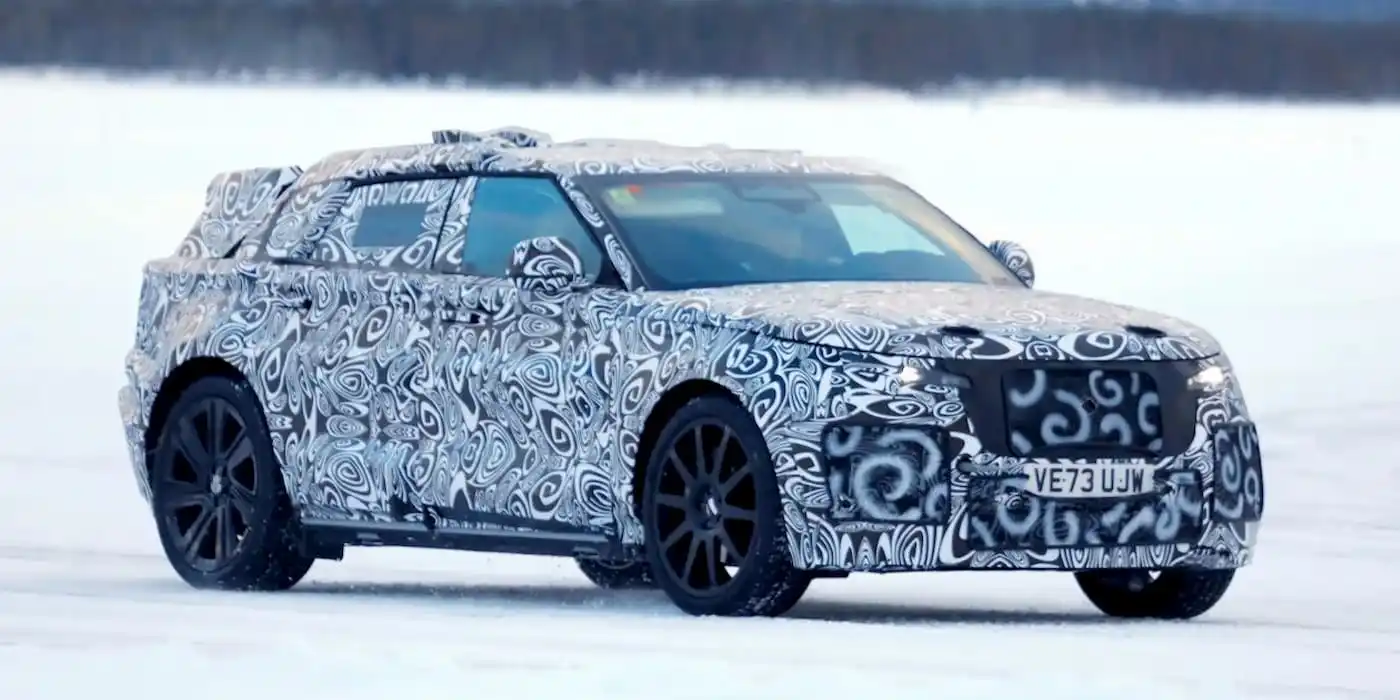
This design direction is both exciting and risky. On one hand, it aligns perfectly with current EV trends—where aerodynamics and visual simplicity take priority. On the other, it challenges the traditional Range Rover DNA, which has always emphasized presence, height, and off-road capability.
Inside, the transformation looks just as dramatic. Early glimpses suggest a cleaner, more digital-first cabin, anchored by a larger central touchscreen and a simplified dashboard layout. The move toward fewer physical controls and more integrated software echoes what we’ve seen from Tesla and other EV-first brands. If executed well, it could elevate the Velar into a true tech-luxury space. If not, it risks alienating buyers who still value tactile controls.
Under the surface, the Velar EV is expected to ride on JLR’s new EMA platform, marking a significant technological shift. While official specs remain under wraps, expectations are high given what we already know about the upcoming Range Rover Electric—over 500 horsepower, a large battery pack, and dual-motor all-wheel drive. If the Velar inherits even part of that DNA, performance and refinement should be more than competitive.
However, timing may be its biggest challenge. With delays already affecting JLR’s EV rollout, including the flagship Range Rover Electric, the Velar EV’s projected debut in late 2026 feels both promising and uncertain. By then, competition from brands like Tesla, BMW, and emerging Chinese EV makers will be even more intense.
In my view, the Velar EV represents a crucial turning point for Range Rover. It’s not just about going electric—it’s about redefining the brand’s identity for a new generation. If Land Rover can balance bold design with authentic capability and premium execution, the Velar EV could become one of the most compelling luxury EVs on the market. If not, it risks becoming another stylish experiment in an increasingly crowded segment.


