Cities across the United States are searching for ways to make electric vehicles more practical for residents who don’t have private garages or driveways. Now San Francisco may be taking a significant step toward solving that problem with a new curbside charging initiative.
Mayor Daniel Lurie recently introduced legislation that would establish the city’s first permanent program for installing EV chargers directly along public streets. The proposal, developed alongside Board of Supervisors President Rafael Mandelman, would create a streamlined permitting pathway allowing charging providers to deploy curbside infrastructure more efficiently.
The program builds on a pilot project launched in 2025, which tested curbside charging stations in select neighborhoods. Early feedback suggests the pilot addressed one of the biggest barriers to EV ownership in dense urban areas: access to home charging.
In cities like San Francisco, a large percentage of residents live in apartment buildings or older housing without dedicated parking. Installing private chargers in those settings is often expensive or simply impossible. As a result, even environmentally conscious residents may hesitate to switch to electric vehicles.
Curbside charging offers a potential solution by bringing charging infrastructure directly into residential neighborhoods. If the legislation is approved, the city hopes to install roughly 100 curbside chargers by 2030. While that number may appear modest, it could represent an important shift in how cities approach EV infrastructure planning.
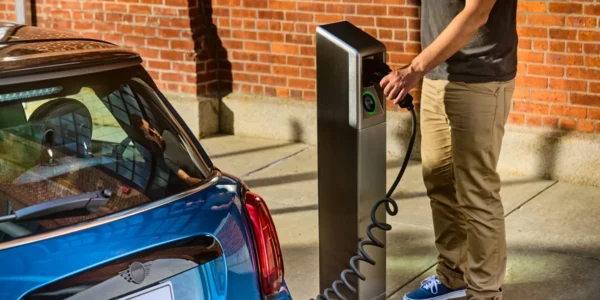
The San Francisco Municipal Transportation Authority will oversee the program and begin accepting applications from charging providers later this year. Instead of approving each charger individually, the city plans to certify vendors first and then allow them to apply for permits at multiple locations. This approach is designed to reduce bureaucratic delays that have historically slowed infrastructure projects.
Other city agencies will also participate in the process, including San Francisco Environment, Public Works, and the Public Utilities Commission. Together, these departments will determine where chargers are most needed based on local demand and community input.
The initiative could also create economic benefits. Labor groups, including members of the International Brotherhood of Electrical Workers, have already begun preparing for increased demand for EV infrastructure installation. Hundreds of electricians in the region have completed specialized training programs focused on electric vehicle charging systems.
San Francisco is simultaneously expanding charging options in other areas as well. Public parking garages are expected to increase their EV charger capacity from just 55 units today to more than 300 by 2027, while city vehicle fleets are also transitioning toward electrification.
Final perspective: The curbside charging proposal highlights an important challenge in the EV transition: infrastructure must evolve alongside vehicle adoption. In dense urban environments, traditional home charging solutions simply don’t work for many residents. If San Francisco’s model proves successful, it could become a blueprint for other major cities looking to make electric vehicles accessible to a much broader population.