
The U.S. government has officially confirmed that Tesla is the buyer behind LG Energy Solution’s massive $4.3 billion LFP battery supply contract, ending months of speculation. While the deal may seem like just another supply agreement, it actually reveals something much bigger: Tesla is rapidly restructuring its energy business around a fully domestic battery supply chain.
A Strategic Move Driven by Tariffs
At the center of this deal is a growing problem — tariffs. Tesla’s energy storage division has been heavily dependent on lithium iron phosphate (LFP) batteries imported from China. However, with tariffs on Chinese batteries rising as high as 82.4%, the cost pressure has become impossible to ignore.
Tesla’s CFO had already warned that tariffs could have an “outsized” impact on the energy business, which is currently one of the company’s fastest-growing segments. In 2024, Tesla deployed 31.4 GWh of energy storage, more than doubling the previous year. That growth continued into 2025, reaching 46.7 GWh, though at a slightly slower pace.
Without a domestic battery supply, Tesla would face a difficult choice: absorb higher costs or pass them on to customers. Either option could slow the expansion of its energy storage business. This new deal with LG effectively removes that risk.
From GM Partnership to Tesla Supply Chain
The batteries will be produced at LG Energy Solution’s factory in Lansing, Michigan — a facility with an interesting backstory. Originally developed as a joint venture with General Motors under the Ultium program, LG took full control of the plant in 2025 after GM exited the partnership.
Now, LG is repurposing the facility to produce LFP prismatic cells, a chemistry it had not previously mass-produced in the United States. With a planned capacity of up to 50 GWh, the plant is expected to begin production in the second half of 2027, aligning with Tesla’s supply contract timeline.
This move positions LG as a leader in domestic LFP production, ahead of competitors like Samsung SDI and SK On.
Building a Domestic Battery Ecosystem
The LG deal is part of a broader strategy by Tesla to localize its battery supply. In late 2025, Tesla also secured a $2.1 billion agreement with Samsung SDI to supply additional LFP batteries from a U.S.-based facility.
Combined, these agreements represent over $6.4 billion in battery investments, signaling a major shift away from reliance on Chinese imports. More importantly, they highlight Tesla’s long-term commitment to scaling its energy storage business.
Powering the Next Generation: Megapack 3
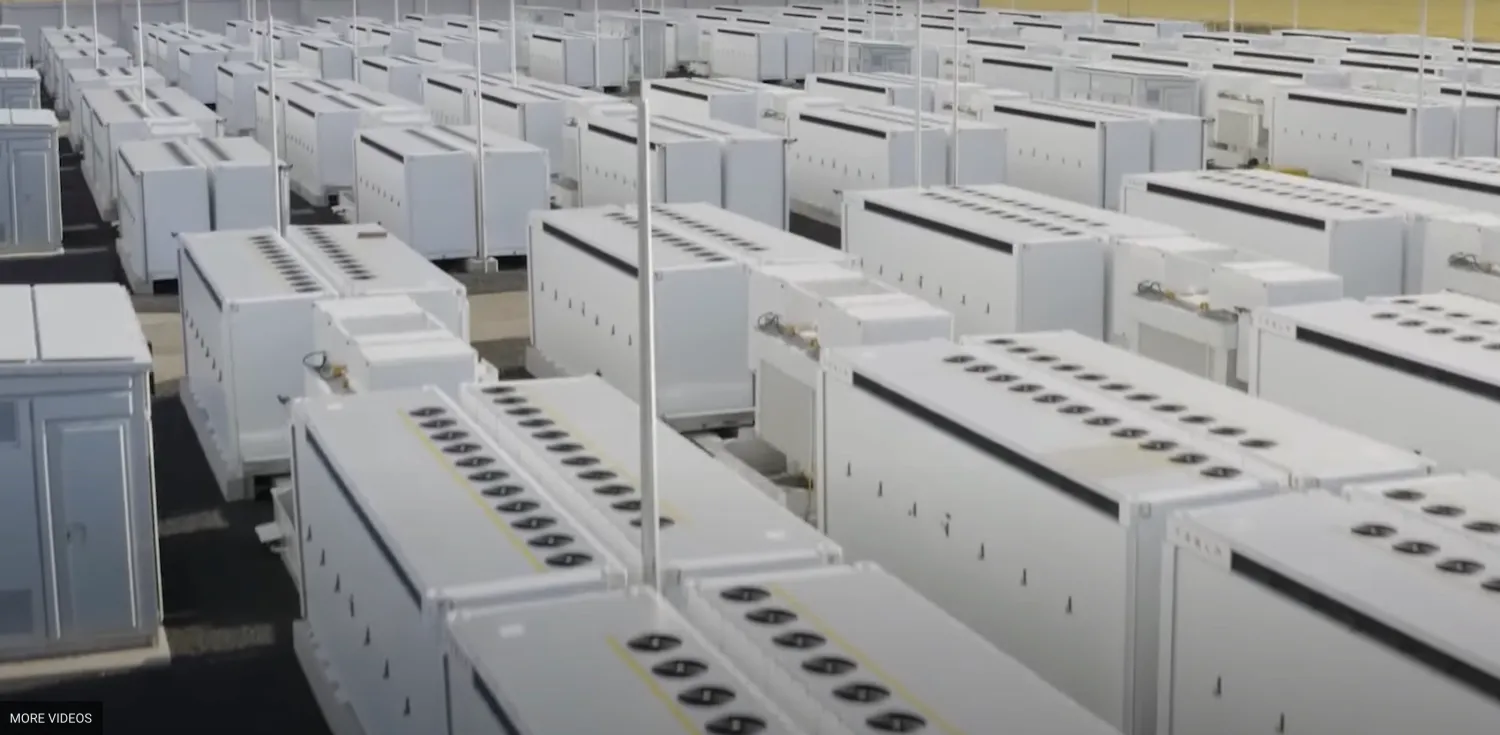
These batteries will be used in Tesla’s next-generation Tesla Megapack 3, a grid-scale energy storage solution designed to support renewable energy infrastructure. Each unit offers around 5 MWh of capacity, an increase from the previous generation, along with a simplified thermal management system.
Production of Megapack 3 is set to begin at Tesla’s Houston Megafactory in late 2026, with a target output of 50 GWh annually. Initially, Tesla may still rely on existing battery inventory or alternative suppliers until LG’s U.S. production ramps up in 2027.
Final Thoughts
This deal is about much more than batteries — it reflects a broader transformation in Tesla’s business model. While the company is best known for electric vehicles, its energy division is quietly becoming a major pillar of growth.
In my view, Tesla’s push to secure domestic battery supply is both strategic and necessary. As geopolitical tensions and trade policies reshape global supply chains, companies that can localize production will have a significant advantage. If Tesla executes this transition successfully, its energy business could become just as important as its automotive segment in the years ahead.