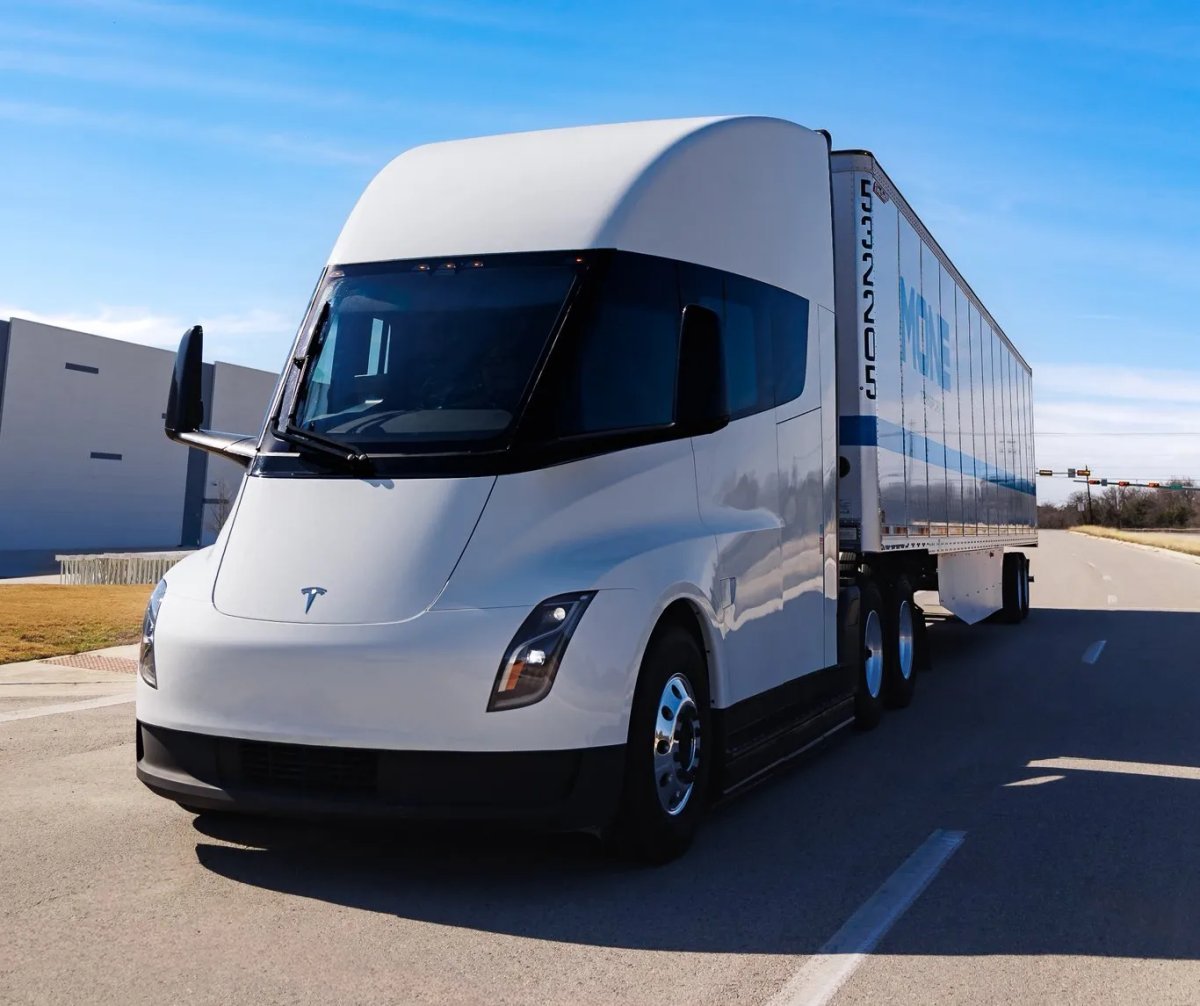
Tesla is finally offering a clearer picture of its long-delayed Semi truck — and based on the latest technical details, the project is no longer just ambitious, but increasingly practical.
During a recent walkthrough, Tesla’s Semi program lead Dan Priestley highlighted major engineering updates, from weight reduction to charging performance and real-world fleet data. The takeaway is simple: Tesla is not just refining the Semi — it is solving the core problems that have historically limited electric trucks.
Weight Problem Solved: Payload Parity with Diesel
One of the biggest criticisms of electric trucks has always been weight. Large battery packs typically reduce payload capacity, making them less viable for commercial use.
Tesla claims it has addressed this directly:
- Around 1,000 lbs of weight reduction compared to earlier versions
- Combined with a 2,000 lb federal EV allowance
This allows the 500-mile version to reach effective payload parity with diesel Class 8 trucks. In real-world operations, Tesla says customers are already hauling up to 45,000 lbs daily, which is a critical benchmark for fleet adoption.
Powertrain Architecture: A Smart Alternative to Transmissions
Instead of using a traditional multi-speed transmission, Tesla designed a dual-axle system with distinct roles:
- Torque axle: optimized for acceleration and hill climbing
- Efficiency axle: handles highway cruising
At cruising speed, the torque axle disengages completely to reduce mechanical drag. This setup effectively solves the classic tradeoff between low-speed power and high-speed efficiency.
From an engineering perspective, this is one of the most elegant aspects of the Semi — simplifying the drivetrain while maintaining performance across different use cases.
Charging and Range: Built for Long-Haul Logistics
Charging is another area where Tesla is pushing boundaries.
- Up to 1.2 MW Megacharging
- Adds roughly 300 miles of range in 30 minutes
Tesla has already begun deploying Megacharger stations, with plans to expand significantly by 2027.
The battery itself is:
- Structurally integrated into the chassis
- Designed for up to 1 million miles of lifecycle
For fleet operators, this durability is just as important as range or charging speed.
Aerodynamics and Efficiency Improvements
Tesla has further improved efficiency through aerodynamic refinements:
- Drag coefficient improved by 7%
- Estimated Cd around 0.4
While that number may not sound extreme for passenger cars, it is highly competitive for a Class 8 truck and directly impacts energy consumption over long distances.
Shared Technology with Cybertruck
Interestingly, the Semi shares several core components with Tesla’s Cybertruck:
- Battery cells
- Inverters and stators
- 48-volt electrical architecture
The shift to 48V significantly reduces wiring weight and complexity compared to traditional 12V systems, which is especially important in large commercial vehicles.
Tesla also replaces hydraulic steering assist with electric actuators, improving efficiency while retaining a mechanical steering link for reliability.
Real-World Practicality: Beyond the Truck Itself
Tesla is also addressing operational inefficiencies beyond the vehicle.
One example is refrigeration:
- The Semi can power trailer-mounted refrigeration units directly
- Eliminates the need for diesel-powered auxiliary engines
This not only reduces fuel consumption but also cuts noise and maintenance costs — a meaningful advantage for logistics companies.
Fleet Performance and Economics
Tesla’s test fleet has accumulated over 13.5 million miles, with:
- Up to 95% uptime
- Most issues resolved within 24 hours
On cost:
- Up to 50% lower energy cost per mile (California)
- Around 20% lower total cost of ownership nationally
With a price of about $290,000 for the long-range version, the Semi is positioned below the average cost of competing zero-emission trucks, which can exceed $400,000.
Market Context: A Narrowing Competitive Field
The competitive landscape is shifting:
- Nikola has exited the market
- Freightliner and Volvo offer electric trucks, but with lower range or higher cost
If Tesla can scale production — with a target of 50,000 units per year at its Nevada factory — it could gain a strong early advantage in the segment.
Final Verdict: A Product That Finally Matches Its Promise
The Tesla Semi has faced delays and skepticism, but the latest updates suggest the product is maturing into a viable commercial solution.
It does not rely on a single breakthrough, but rather a combination of smart engineering decisions:
- Efficient dual-axle drivetrain
- High-power charging infrastructure
- Real-world cost advantages
- Integration with existing logistics systems
Clear opinion:
The Tesla Semi is no longer just a concept trying to prove that electric trucks can work. It is becoming a serious contender in commercial transport — and if Tesla executes on production, it could reshape expectations for long-haul trucking over the next decade.