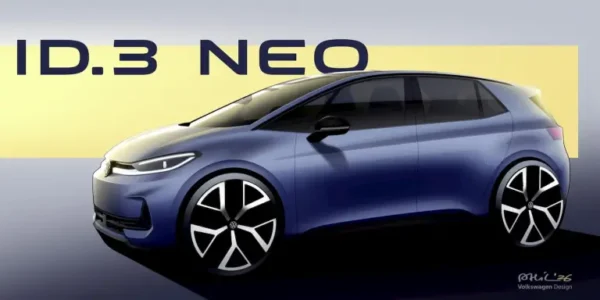
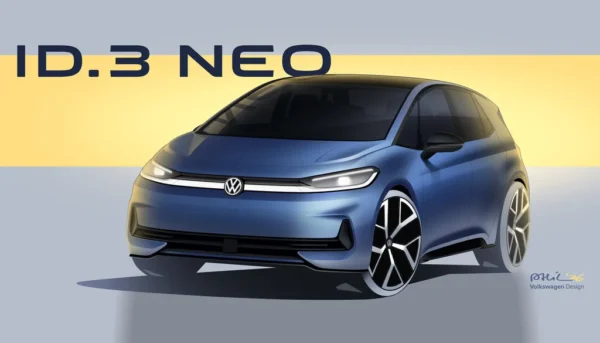
When Volkswagen introduced the Volkswagen ID.3 in 2020, it was meant to signal a new era for the brand’s electric mobility ambitions. The ID.3 was the first model built on Volkswagen’s dedicated MEB electric platform and effectively became the EV equivalent of the iconic Golf for the modern era. Now, the company is preparing to take the next step with a significantly updated successor called the ID.3 Neo.
The new model is not just a minor refresh. Volkswagen says the ID.3 Neo will feature a redesigned exterior, upgraded technology, and a new software generation aimed at improving performance and user experience. One of the most notable upgrades is the introduction of the brand’s latest Innovision Infotainment system, which brings a more responsive interface and expanded digital features to the vehicle. This updated system is also being rolled out across other ID models, including the Volkswagen ID.4, Volkswagen ID.5, and Volkswagen ID.7.
Another key improvement is the integration of Vehicle-to-Load (V2L) capability across the updated ID lineup. This allows the car’s battery to power external devices through a 230-volt outlet delivering up to 3.6 kW of electricity. In practical terms, the vehicle can run small appliances, outdoor equipment, or even power tools — features that are becoming increasingly common among modern electric vehicles.
Volkswagen has also introduced a new electric drivetrain called the APP 350, delivering 187 horsepower (140 kW) in entry-level versions of the ID.4 and ID.5. Paired with a new 58 kWh LFP battery pack, the system improves efficiency and increases driving range by up to 40 km compared with the previous APP 310 setup.
Inside the cabin, digital integration continues to expand. Features such as a smartphone-based digital key and a built-in app store aim to bring the user experience closer to what consumers expect from modern connected devices.
In the broader EV market, the ID.3 Neo will face strong competition from vehicles like the Tesla Model 3, MG4 Electric, and BYD Dolphin. While the Tesla Model 3 targets a slightly higher segment, models like the MG4 and BYD Dolphin are particularly aggressive competitors in terms of price and value.
Volkswagen’s challenge will be balancing technology upgrades with competitive pricing. Chinese manufacturers have rapidly pushed EV costs down, forcing traditional automakers to rethink how they design and price electric vehicles.
Final perspective: The ID.3 Neo represents Volkswagen’s effort to refine one of its most important electric models rather than completely reinvent it. With improved software, new drivetrain technology, and additional digital features, the vehicle aims to stay relevant in a rapidly evolving EV market. Whether it succeeds will depend largely on how well Volkswagen can match the innovation and pricing pressure coming from newer EV competitors.