Volvo is reportedly preparing to pull one of its most promising electric vehicles from the United States. The compact Volvo EX30 — widely praised for its performance, design, and affordability — is expected to leave the US market after the 2026 model year, marking a surprisingly short lifecycle for a model that had generated strong early interest.
A Strong Product Facing Market Challenges
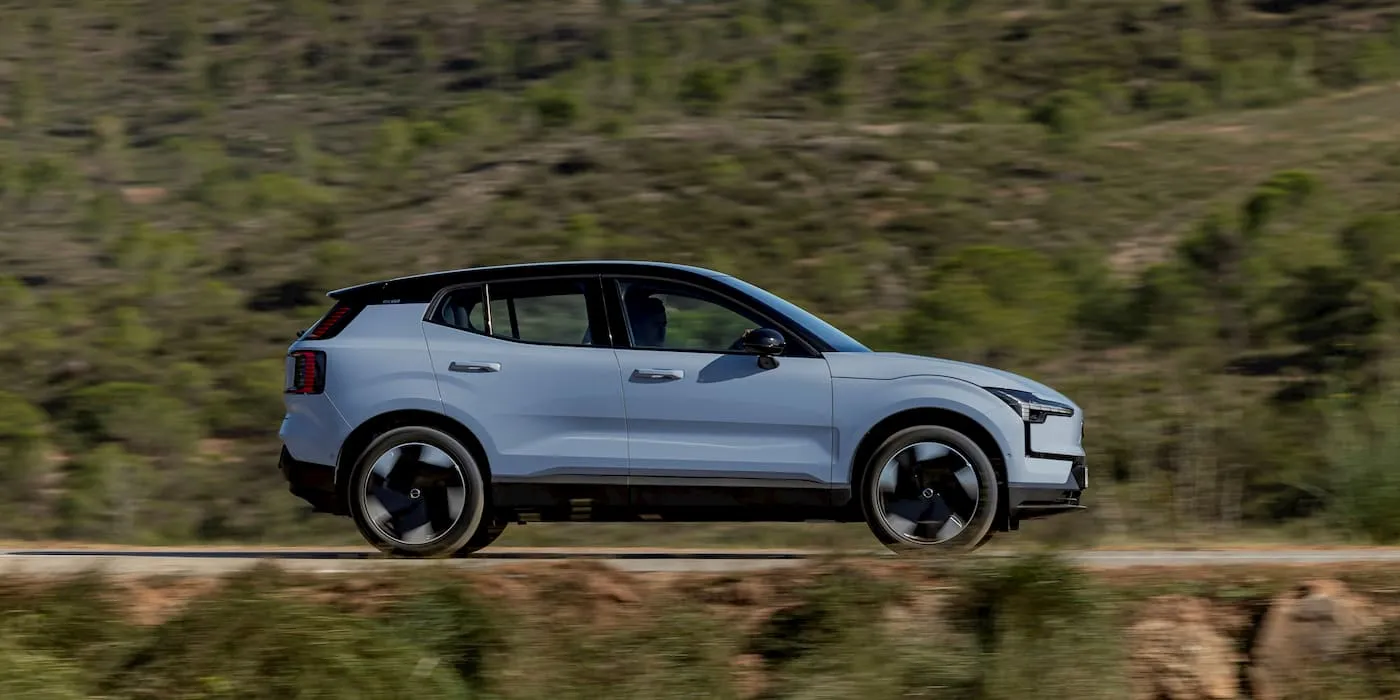
The EX30 occupies a unique position in Volvo’s EV lineup. It is not only the brand’s smallest and most affordable electric vehicle in the US, but also one of its quickest. Despite its compact size, the EX30 offers a practical interior layout and crossover-like versatility, making it appealing to urban drivers and first-time EV buyers.
Critically, the vehicle has also improved since launch. Volvo has rolled out several over-the-air software updates addressing early issues, including usability improvements and the addition of Vehicle-to-Load (V2L) functionality — a feature that allows the car to power external devices.
These updates demonstrated Volvo’s commitment to refining the EX30, making its withdrawal from the US market all the more unexpected.
Why Is Volvo Pulling the EX30?
Volvo has cited “market conditions and financial factors,” a broad explanation that likely reflects a combination of challenges.
One of the most significant factors is production and trade policy. The EX30 was initially manufactured in China, which subjected it to US tariffs on Chinese-built electric vehicles. These tariffs made it difficult for Volvo to maintain competitive pricing in the American market.
Although Volvo shifted some production to its plant in Ghent, Belgium, to mitigate these issues, the move may not have been enough to fully offset costs. As a result, the EX30’s position as an “affordable EV” became harder to sustain in the US compared to other global markets.
A Missed Opportunity in the US EV Market
The decision is notable because the EX30 addressed a key gap in the US EV landscape: affordable, compact electric vehicles. Most EV offerings in the US tend to skew toward larger, more expensive SUVs and trucks.
The EX30, by contrast, offered a smaller footprint and a more accessible price point — closer to what many urban buyers are looking for. Its departure could further narrow consumer choice in this segment.
Volvo will continue to sell other electric models in the US, including the Volvo EX40, the flagship Volvo EX90, and the upcoming Volvo EX60. However, all of these models sit at higher price points, reinforcing a shift toward larger and more premium vehicles.
What This Means for Buyers
For American consumers, the EX30’s exit highlights a broader challenge: the availability of affordable EVs remains limited. Buyers interested in the model will need to act quickly, as dealers have only a short window to place final orders.
Existing owners, however, are unlikely to face major issues. Volvo has confirmed that support will continue, including software updates, service, parts, and warranty coverage. Since the EX30 will remain on sale in other global markets, ongoing development and updates are expected to continue.
Final Thoughts
The withdrawal of the Volvo EX30 from the US market underscores how external factors — particularly tariffs and production costs — can shape the success of even well-received vehicles.
In my view, the EX30 represents exactly the type of EV the US market needs more of: compact, relatively affordable, and practical. Its departure is less a reflection of the product itself and more a sign of the structural challenges facing automakers trying to balance global supply chains with regional policies.