
As urban mobility continues to evolve in the US, a growing number of consumers are questioning whether a full-size car is always necessary. From e-bikes to neighborhood electric vehicles (NEVs), alternatives are gaining traction — and Wink Motors is betting that microcars could be the next logical step.
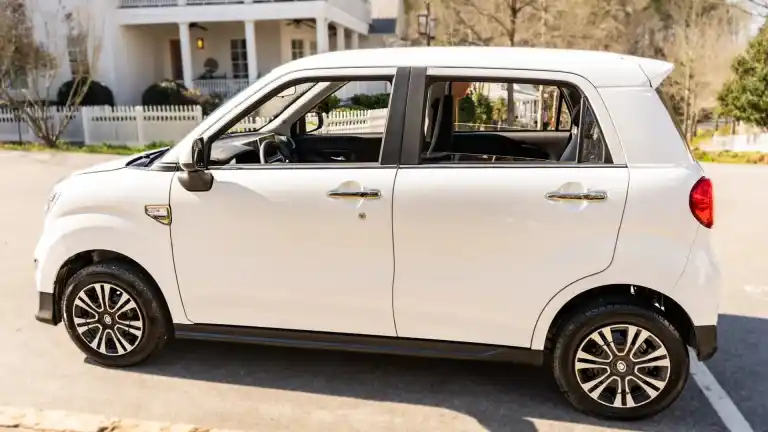
With the launch of the Wink Mark3, the company is introducing a compact, fully enclosed electric vehicle designed specifically for American regulations. Priced at $19,995, it aims to deliver a more practical, car-like experience than traditional low-speed vehicles, while remaining far more affordable than conventional EVs.
What Is the Wink Mark3 — and Why It Matters
The Wink Mark3 is classified as a low-speed vehicle (LSV) in the US, meaning:
- Street-legal on roads up to 35 mph (56 km/h)
- Top speed capped at 25 mph (40 km/h)
- Registrable, insurable, and road-legal in 49 states
Unlike typical golf carts or basic NEVs, Wink positions the Mark3 as a true “microcar” — a small but complete vehicle designed to replace short-distance car trips, not just complement them.
Globally, this concept is well established in Europe and Asia. What’s new here is a version tailored specifically for US buyers, regulations, and expectations.
Technical Overview: Small Size, Surprisingly Capable
From a technical standpoint, the Wink Mark3 focuses on practicality rather than performance.
Battery and Range:
- 11.5 kWh LiFePO4 battery
- Up to 85 miles (137 km) of range
This is more than sufficient for:
- Daily commutes
- Short urban trips
- Neighborhood driving
Charging:
- Standard home outlet (Level 1)
- Level 2 charging support
- Optional roof-mounted solar panel (trickle charging only)
The solar option is not a primary charging solution, but it can help offset energy usage during short trips.
Interior and Features: Closer to a Real Car Than Expected
One of Wink’s key differentiators is equipment. Unlike many low-cost EVs that require upgrades, the Mark3 comes well-equipped as standard:
- Air conditioning and heating
- Power windows and door locks
- Bluetooth connectivity
- Backup camera
This pushes it beyond the typical “golf cart with doors” category and closer to a simplified city car experience.
Despite its compact size, the five-door layout is designed to seat four adults, which is uncommon in this segment.
Safety Engineering: Going Beyond Minimum Requirements
Safety is where Wink is trying to stand out in the LSV category.
Key highlights include:
- Reinforced steel unibody structure
- Three-point seat belts
- Dual-circuit braking system
- High-mounted brake light
- Door-exit warning alerts
Additional features:
- Child safety locks
- Seatbelt reminders
- Door status indicators
While LSV regulations in the US are relatively minimal, Wink claims the Mark3 exceeds many of these requirements, positioning it as a safer alternative to standard NEVs.
Real-World Limitations: Where It Falls Short
Despite its strengths, the Mark3 has clear limitations:
- Not highway-capable
- Strict 25 mph speed limit
- Limited use outside urban or suburban areas
This means it cannot fully replace a traditional car for most households, but it can serve as a second vehicle or a primary option for city-focused users.
Pricing and Value: Where the Wink Mark3 Stands
At $19,995, the Mark3 sits in a unique position.
Compared to traditional EVs:
- Most entry-level EVs: $30,000–$40,000+
- Wink Mark3: significantly cheaper
Compared to LSVs / golf carts:
- Basic LSVs: $8,000–$15,000
- Premium LSVs (e.g., Polaris GEM): $15,000–$25,000
The Mark3 is priced toward the higher end of the LSV market, but justifies it with:
- Full enclosure
- Better safety features
- More car-like interior
It also includes the impact of high import tariffs, which have increased costs across this category in recent years.
Ownership Model: A Different Approach
Wink is also rethinking how ownership works:
- Remote demo options via video calls
- Nationwide support network (10,000+ independent mechanics)
- Local servicing with factory-backed support
- Overnight parts delivery
This decentralized service model could make ownership more accessible, especially outside major cities.
Market Position: A Niche That’s Growing
The Wink Mark3 sits between:
- Golf carts / NEVs
- Full-size electric vehicles
Its real competitors are not Tesla or mainstream EVs, but:
- Polaris GEM
- WAEV electric vehicles
- Other low-speed urban EVs
As urban congestion and costs increase, this niche is likely to grow — especially among:
- City residents
- Retirees
- Short-distance commuters
Final Verdict: Practical, Affordable — But Not for Everyone
The Wink Mark3 is not trying to replace traditional cars entirely. Instead, it offers a focused solution for a specific problem: short-distance, low-speed transportation.
Strengths:
- Affordable compared to full EVs
- Practical range for city use
- Well-equipped for its category
- Strong safety focus for an LSV
Limitations:
- Low top speed
- Limited road compatibility
- Niche use case
Clear opinion:
The Wink Mark3 makes a strong case for rethinking everyday transportation, especially in urban environments. It is one of the most complete and practical microcars designed for the US market so far. However, its limitations mean it works best as a secondary vehicle rather than a full replacement for most drivers.
For the right buyer, though, it may be exactly what modern mobility needs: smaller, simpler, and significantly more affordable.