The race to develop fully autonomous transportation is accelerating, and Zoox is making another strategic move to stay competitive. The Amazon-owned robotaxi developer has announced plans to expand testing operations into Phoenix and Dallas, marking another milestone as the company gradually scales its autonomous mobility network across major US cities.
In the increasingly crowded robotaxi landscape, Zoox faces formidable competitors including Tesla, Waymo, and Nuro. Yet Zoox stands apart in one critical way: its purpose-built autonomous vehicle. Unlike most rivals that retrofit traditional cars, Zoox has designed a fully autonomous electric vehicle from the ground up — one without a steering wheel or pedals, optimized entirely for driverless operation.
These futuristic vehicles have already been navigating public roads in the San Francisco Bay Area for years and are now transporting passengers along the Las Vegas Strip. However, when expanding into new markets, Zoox initially deploys conventional vehicles equipped with its advanced sensor systems. This allows the company to collect detailed mapping data and safely test its autonomous software before introducing its purpose-built robotaxis.
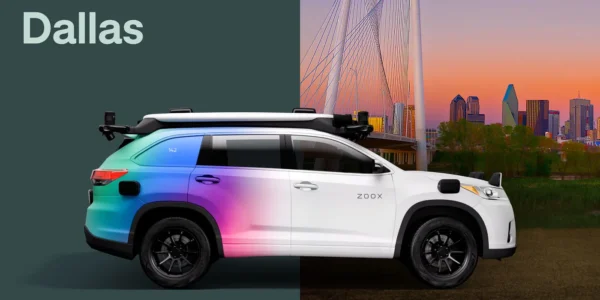
The expansion into Phoenix and Dallas will follow that same methodical process. Residents may first notice a small number of modified test vehicles on local roads, conducting manual mapping runs. Only after extensive data collection and validation will autonomous testing begin — initially with safety drivers monitoring the system.
Supporting the expansion, Zoox is also building new robotaxi depots in both cities along with a new Fusion Center in Scottsdale, Arizona. These facilities serve as the operational backbone of the fleet, managing tele-guidance, real-time monitoring, and rider support to help autonomous vehicles handle complex traffic situations.
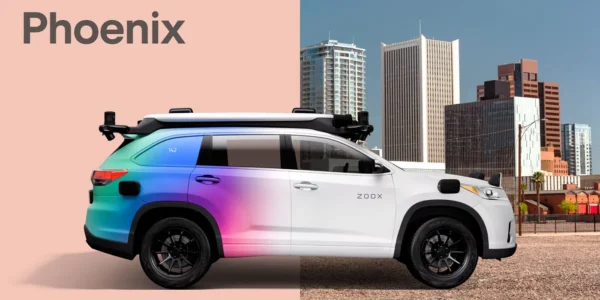
Zoox’s growth reflects steady momentum. By late 2025, the company reported surpassing one million autonomous miles and transporting over 300,000 riders through programs in San Francisco and Las Vegas.
Final perspective: Zoox’s expansion strategy highlights a careful balance between ambition and caution. Autonomous technology still faces regulatory, technical, and public trust challenges, but incremental deployments across diverse cities could prove crucial in refining the technology. If Zoox continues scaling responsibly, it may play a significant role in shaping how urban transportation evolves over the next decade.