
Introduction to Yamaha’s R1 Development
The Yamaha R1 has become a track-only superbike in the European market, primarily due to not meeting the latest Euro5 emissions requirements. However, Yamaha isn’t resting on its laurels. Recent patent applications reveal exciting developments, particularly in the realm of active bodywork, aimed at enhancing both performance and emissions compliance.
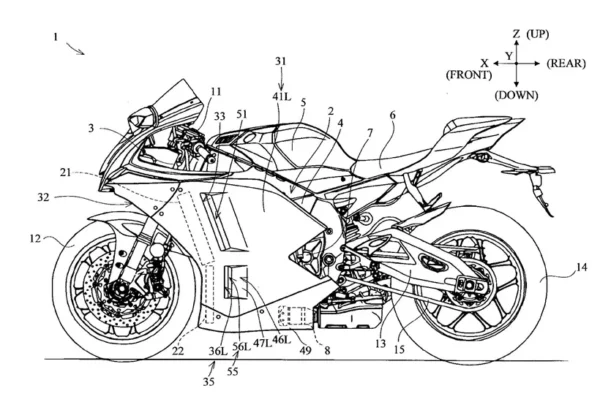
Active Bodywork: A Nod to the Past
The concept of movable shutters controlling airflow isn’t entirely new; it dates back to prewar cars, which utilized manual and automated systems to maintain optimal engine temperatures. Fast forward to today, and this idea is making a comeback in modern automobiles, with many featuring automated shutters designed to improve aerodynamics. Yamaha’s latest patent showcases a smart twist on this traditional approach by positioning movable shutters on the fairing sides instead of the radiator intake, allowing for innovative cooling solutions.
Benefits of the New Airflow System
Yamaha’s design features small stepper motors that adjust the shutters based on multiple sensors, including coolant temperature and throttle position. By optimizing airflow, not only can the R1 enhance speed and power efficiency, but it can also meet stringent emissions standards. Closed vents create a high-pressure bubble in front of the radiator, reducing drag significantly. This is vital for the motorcycle’s performance and could support a potential return to the market after meeting Euro5 criteria.
In conclusion, as Yamaha explores ways to elevate the R1’s performance while tackling challenging emissions regulations, this innovative approach to active bodywork reveals the brand’s commitment to remain relevant in the evolving superbike market.