Ford reported its best overall US sales year since 2019, yet its electric vehicle results moved in the opposite direction. The automaker sold 84,113 fully electric vehicles in 2025, a 14% decline from nearly 98,000 units in 2024, highlighting the uneven pace of EV adoption as incentives shifted and competition intensified.
A major factor behind the decline was the expiration of the $7,500 federal EV tax credit at the end of September. Like most automakers, Ford saw a sharp pullback in the fourth quarter, when EV sales dropped to just over 14,500 units, down 52% year over year from Q4 2024.
Lagging Behind GM as Incentives Fade
Ford’s EV performance contrasted sharply with that of General Motors, which reported 169,887 EVs sold in the US in 2025, up 48% from the prior year—more than double Ford’s volume. GM also experienced a Q4 slowdown, with deliveries falling 43% to 25,219 units, but its broader EV lineup across Chevrolet, GMC, and Cadillac helped sustain full-year growth.
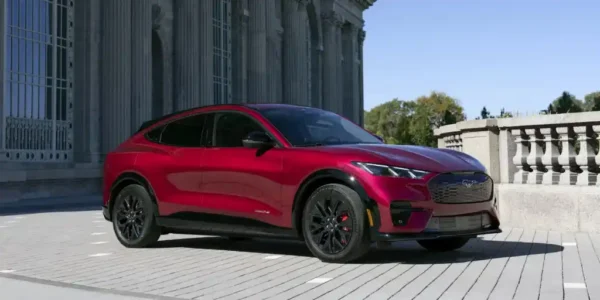
By comparison, Ford currently offers just three EV models in the US: the F-150 Lightning, Mustang Mach-E, and E-Transit. That narrower portfolio left Ford more exposed as demand softened in specific segments.
Model-by-Model Results
Ford’s EV results were mixed across its lineup. F-150 Lightning sales fell 18.5% to 27,307 units, while Mustang Mach-E deliveries were largely flat at 51,620 units. The commercial-focused E-Transit saw the steepest drop, down 59% to 5,186 units for the year.
In contrast, Ford’s hybrid vehicles delivered a standout performance. The company sold 228,072 hybrids in 2025, up 22% year over year, marking its strongest hybrid sales result to date. When combining EVs, hybrids, and plug-in hybrids, Ford said it sold more “electrified” vehicles than GM and Stellantis—underscoring where current customer demand appears strongest.
Strategic Reset Underway
Ford has already begun adjusting its EV strategy. The company has ended production of the current F-150 Lightning with plans to replace it with an extended-range electric vehicle (EREV) version. Longer term, Ford is pivoting toward smaller, more affordable EVs built on its new Universal EV platform.
The first model on that platform will be a midsize electric pickup, roughly the size of a Maverick or Ranger, scheduled for production at Ford’s Louisville Assembly Plant starting in 2027. Ford has indicated starting prices of around $30,000, signaling a renewed focus on affordability.
Perspective
Ford’s 2025 results suggest the EV market remains highly sensitive to incentives and lineup breadth. While pure EV sales declined, strong hybrid demand helped stabilize Ford’s broader electrification strategy. The shift toward more affordable EVs and EREVs appears pragmatic, but execution—and timing—will be critical if Ford is to regain momentum against better-diversified rivals in the next phase of the transition.