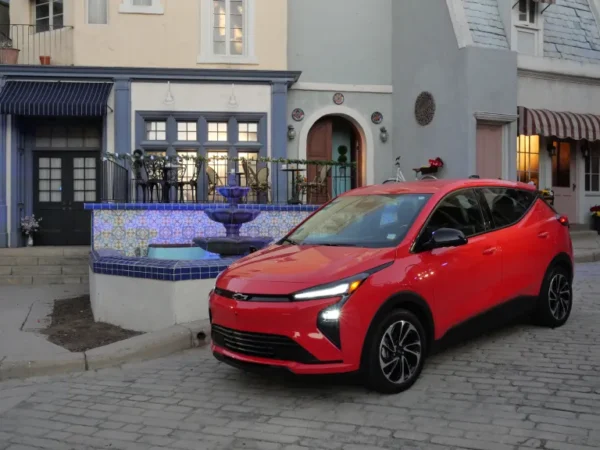
Chevrolet has begun delivering 2027 model-year Chevy Bolt EVs to dealerships, marking the return of one of its most recognisable electric vehicles just two years after production ended. While the revived Bolt retains its familiar hatchback form, it arrives with a series of updates—and an important caveat: General Motors says the model will only be offered for a limited time.
A Brief History of the Bolt
First launched for the 2017 model year, the Chevy Bolt EV represented GM’s first serious, ground-up modern EV effort. Unlike earlier compliance-focused projects such as the Spark EV, the Bolt was designed from the outset as a mass-market electric car. It quickly gained a reputation for combining usable range, compact dimensions, and aggressive pricing—especially toward the end of its original production run.
Despite those strengths, the Bolt was discontinued in late 2023. A lengthy battery recall and its reliance on GM’s first-generation EV architecture—rather than the newer Ultium system—ultimately made it less aligned with GM’s long-term EV strategy, even as sales were peaking.
Why Bring It Back Now?
The decision to revive the Bolt suggests a pragmatic reassessment. As EV demand in the US becomes more price-sensitive and less focused on large, high-margin vehicles, GM appears to recognise the value of a compact, affordable electric hatchback. The updated Bolt is now based on Ultium technology, allowing it to integrate more easily into GM’s current battery and software ecosystem.
However, GM’s insistence that the refreshed Bolt will only be sold for a “limited time” raises questions about its role in the lineup. Rather than a full relaunch, the 2027 Bolt appears to function as a bridge model—filling a gap below larger Ultium-based EVs while GM continues to adjust its broader electrification plans.
Market Positioning and Risks
The Bolt’s return also reflects a broader industry trend. As incentives fluctuate and buyers push back against rising EV prices, manufacturers are under pressure to offer smaller, more accessible electric vehicles. The Bolt’s compact size and established nameplate give it a built-in audience, particularly among urban drivers and first-time EV buyers.
At the same time, positioning the car as a short-run product limits GM’s exposure. It allows the company to test renewed demand for affordable EVs without committing to long-term production volumes that could become risky if market conditions shift again.
Perspective
The 2027 Chevy Bolt’s comeback is less about nostalgia and more about timing. It highlights the tension between ambitious, future-facing EV strategies and the immediate realities of consumer demand. Whether the Bolt’s return becomes a brief encore or a signal of a deeper shift toward smaller, lower-cost EVs remains to be seen—but its reappearance suggests GM is willing to revisit past successes as it recalibrates its electric ambitions.