BMW has offered its clearest picture yet of what the electric M3 will become, and while many of the headline numbers are still under wraps, the direction is now unmistakable. After years of teasers and heavily camouflaged prototypes, BMW is beginning to frame its first fully electric M car not as a compromise—but as a reinvention of what “M performance” can mean in the EV era.
A new kind of M, built from the ground up
BMW has been talking up its electric M ambitions since 2022, but this latest update confirms that the upcoming M3 is not a lightly modified electric sedan. It’s being developed from scratch on BMW M’s new M eDrive architecture, drawing heavily from the Gen6 Neue Klasse platform.
The most striking detail is the powertrain layout: four electric motors, one at each wheel. Two sit on the front axle and two at the rear, allowing BMW to blend rear-wheel-drive character with all-wheel-drive traction—and even decouple the front axle when conditions allow. On paper, this promises a level of torque vectoring and precision that would be extremely difficult to achieve with combustion hardware.
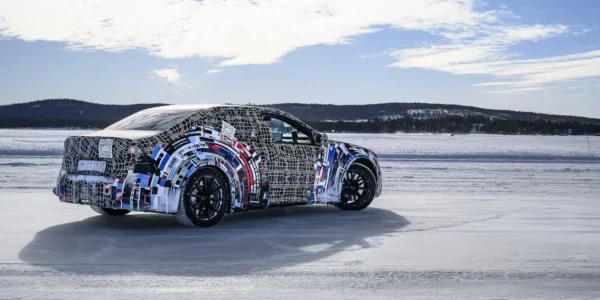
All of this is governed by M-specific software, including a performance-focused evolution of BMW’s Neue Klasse “Heart of Joy” control units and what BMW calls M Dynamic Performance Control. BMW hasn’t shared output figures yet, but it has described these motors as the most powerful units ever used in an M production car—strong language from a brand with more than five decades of performance heritage.
Battery, sound, and the emotional question
BMW has confirmed the electric M3 will use a high-voltage battery with more than 100 kWh of usable capacity, suggesting a focus on sustained performance rather than short bursts. Beyond that, details remain intentionally vague.
Like other performance EVs, BMW plans to address the emotional side of driving with multiple drive modes, simulated gear shifts, and a bespoke soundscape. This mirrors approaches seen in rivals such as the Hyundai IONIQ 5 N, which has shown that carefully designed software can bring engagement back into electric performance cars—even if purists remain divided.
How it stacks up against emerging rivals
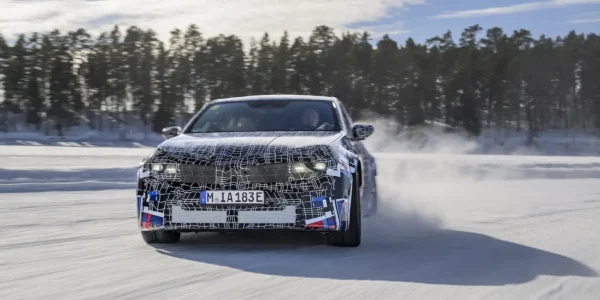
By the time it launches in 2027, the electric M3 will enter a very different landscape from today’s M cars. Genesis has already fired the opening shot with the Genesis GV60 Magma, offering extreme output, distinctive styling, and a clear attempt to build a performance sub-brand around EVs.
The difference is philosophical. Where Genesis is positioning Magma as a dramatic statement, BMW appears to be aiming for technical supremacy and dynamic control, leaning heavily on software and chassis intelligence rather than raw spectacle alone. The electric M3 won’t just be judged on straight-line speed—it will be judged on whether it still feels like an M car when pushed hard on a demanding road or circuit.
Perspective
BMW is clearly confident that its first electric M car can set a new benchmark, but it’s also clear the company is taking its time. That caution suggests BMW understands the stakes: this isn’t just another model launch, it’s a test of whether a legendary performance badge can successfully cross into a fully electric future.
For now, the electric M3 feels less like a finished promise and more like a carefully unfolding story. Whether it ultimately redefines the segment—or simply joins an increasingly crowded field of high-performance EVs—will depend on how convincingly BMW can translate decades of M philosophy into electrons and code. The anticipation is real, and so are the expectations.