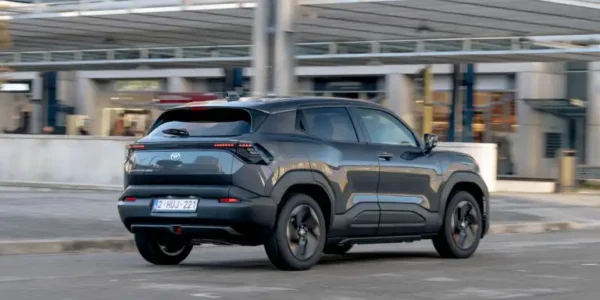
Toyota is preparing to launch the Urban Cruiser EV as its first all-electric vehicle in India, marking a significant milestone for the brand in one of the world’s fastest-growing EV markets. Expected to debut on January 20, 2026, the compact electric SUV is projected to start at around Rs 19 lakh ($21,000), placing it squarely in the heart of India’s competitive mid-size electric SUV segment.
After introducing the Urban Cruiser EV in Europe last month, Toyota’s decision to bring the model to India highlights the country’s rising importance as a global EV manufacturing and consumption hub.
Why India, and why now?
India’s EV market has been shaped largely by domestic manufacturers such as Tata Motors and Mahindra & Mahindra, which benefit from local production and strong government incentives. High import tariffs have made life difficult for global EV leaders like BYD and Tesla, while brands such as Hyundai have found success with locally built models like the Creta Electric.
Toyota is following that same localization playbook. The Urban Cruiser EV is closely related to the Maruti Suzuki e-Vitara and will be manufactured at Suzuki Motor’s Gujarat plant, allowing Toyota to remain cost-competitive and avoid punitive import duties.
Powertrain and range: competitive on paper
While final specifications have yet to be confirmed, the Urban Cruiser EV is expected to offer two battery options:
49 kWh
61 kWh
Toyota and Suzuki claim an ARAI-certified range of up to 543 km (337 miles), with real-world driving range likely exceeding 500 km (310 miles) under typical conditions. That would place the Urban Cruiser EV near the top of its segment for efficiency.
For comparison:
Hyundai Creta Electric: approx. 473 km ARAI range
Tata Curvv EV: around 500+ km (depending on variant)
MG ZS EV: about 461 km
Mahindra BE 6: performance-focused, but pricier
On range alone, Toyota’s entry looks highly competitive—especially for buyers prioritizing long-distance usability.
Interior and practicality
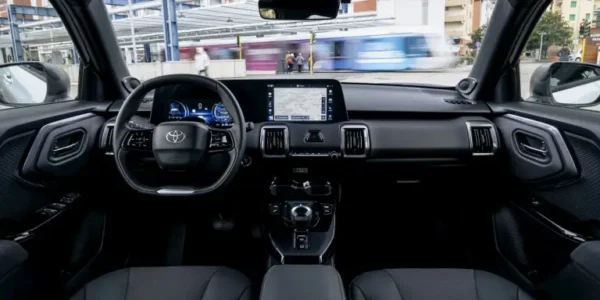
The cabin is expected to closely mirror the European-spec model, featuring a 10.25-inch digital driver display and a 10.1-inch infotainment touchscreen with Apple CarPlay and Android Auto. Notably, Toyota retains physical buttons for climate and volume controls—an important usability advantage for Indian driving conditions.
Boot space is expected to be around 310 liters, aligning with rivals in the segment and suitable for family use.
Pricing and positioning
According to Autocar India, pricing is expected to fall between Rs 19 lakh and Rs 25 lakh ($21,000–$27,500). That places the Urban Cruiser EV slightly above the Creta Electric’s entry price but potentially justified by its longer claimed range and Toyota’s reputation for reliability and after-sales support.
Final outlook
Toyota’s Urban Cruiser EV isn’t designed to disrupt the global EV market—but it doesn’t need to. Its real mission is to establish Toyota’s EV credibility in India using a locally built, sensibly priced, and range-focused SUV. By choosing India, Toyota gains scale, cost efficiency, and access to a rapidly electrifying customer base.
If the real-world range holds up and pricing remains aggressive, the Urban Cruiser EV could become a quiet but important success—not just as Toyota’s first EV in India, but as a foundation for the brand’s broader electric ambitions in emerging markets.