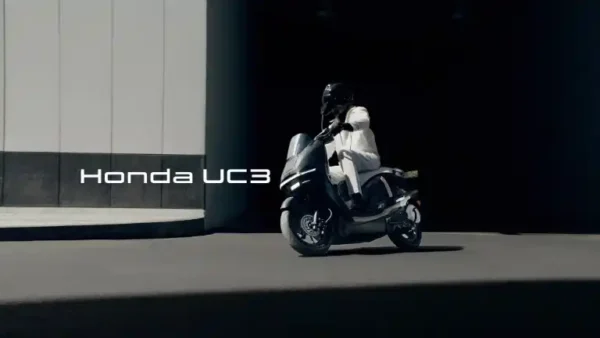
Honda has been accelerating its electric two-wheeler rollout over the past few years, and its latest move may be one of the most telling yet. The newly announced Honda UC3, set to launch in Vietnam and Thailand this spring, isn’t just another electric scooter—it’s a glimpse into how Honda sees the future of everyday mobility in Asia.
Positioned as the electric equivalent of a 110cc gasoline scooter, the UC3 targets the heart of the region’s transport market. In countries where scooters are not lifestyle products but essential daily tools, this positioning matters far more than headline performance figures.
Designed for reality, not hype
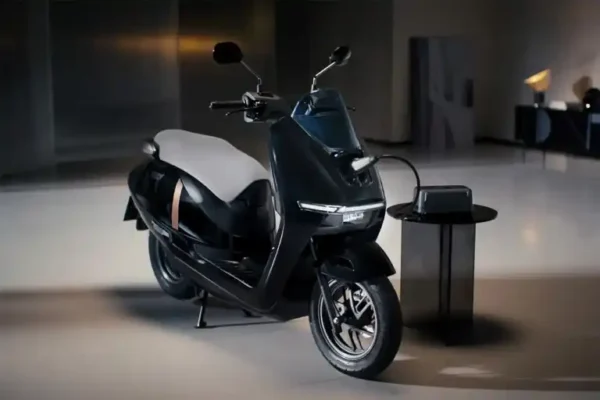
The UC3 uses Honda’s first fixed-type LFP (lithium iron phosphate) battery, paired with an in-house wheel-side motor producing up to 6 kW. Performance is modest but appropriate: a top speed of 80 km/h (50 mph) and a WMTC-rated range of up to 122 km (76 miles) from a 3.2 kWh integrated battery. Three ride modes and a reverse function round out a package clearly optimized for dense urban use.
Compared to popular electric scooters already on Asian roads—such as VinFast’s mid-range models in Vietnam or Yadea and Gogoro offerings elsewhere—the UC3 doesn’t try to win on raw speed or aggressive styling. Instead, it leans on Honda’s traditional strengths: predictable performance, durability, and familiarity for riders transitioning from petrol scooters.
Fixed battery vs. swapping: a quiet pivot
Perhaps the most interesting choice is Honda’s decision to go with a fixed battery, despite being one of the strongest advocates of battery swapping through its Mobile Power Pack e: ecosystem. That’s a notable shift.
While competitors like Gogoro have built entire businesses around swapping, Honda appears to be hedging. Fixed batteries simplify ownership, reduce infrastructure dependence, and align better with private users who can charge at home or work. At the same time, Honda says it will continue expanding swap stations for fleets and delivery riders—acknowledging that no single solution fits every use case.
Policy-driven timing
The UC3’s arrival also lines up neatly with policy trends. Vietnam, in particular, is moving toward restrictions on gasoline motorcycles in major cities to combat air pollution. With tens of millions of petrol scooters still in circulation, electrification isn’t optional—it’s inevitable. Honda’s UC3 feels less like a bold experiment and more like a calculated response to regulatory reality.
Final outlook
The Honda UC3 won’t redefine electric motorcycles overnight. But that’s not its mission. Its real significance lies in Honda’s willingness to adapt—embracing fixed batteries, supporting charging infrastructure, and meeting riders where they actually are. In Southeast Asia’s mass-market EV transition, quiet pragmatism may matter more than flashy innovation—and Honda seems to understand that well.