Wind and solar energy generated more electricity than fossil fuels across the European Union for the first time in 2025, according to a new report tracking power generation and demand in all 27 member states.
The shift was driven primarily by rapid growth in solar power. Solar generation rose 20.1% last year, marking the fourth consecutive year of growth above 20%, and accounted for a record 13% of the EU’s electricity output. That put solar ahead of both coal and hydropower.
All EU countries produced more solar power in 2025 than a year earlier, reflecting continued expansion of installed capacity. In Hungary, Cyprus, Greece, Spain and the Netherlands, solar supplied more than 20% of total electricity generation.
Renewable sources as a whole provided 48% of the EU’s electricity in 2025. Weather conditions shaped the mix: hydropower output fell 12% and wind generation slipped 2%, while sunnier conditions supported higher solar output. Despite the decline, wind remained the bloc’s second-largest source of electricity at 17%, producing more power than gas.
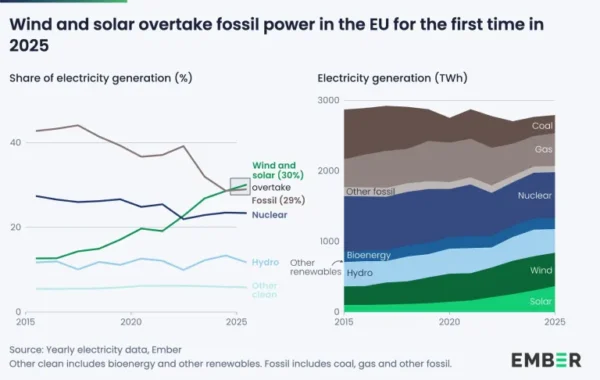
The report suggests the shift is becoming structural rather than cyclical. In 14 of the EU’s 27 countries, wind and solar generated more electricity than all fossil fuels combined last year. Over the past five years, their combined share rose from 20% in 2020 to 30% in 2025. Over the same period, fossil fuels fell from 37% to 29%, while nuclear and hydropower output remained broadly stable or declined slightly.
Gas-fired power generation increased by 8% in 2025, largely compensating for weaker hydropower production. Even with that rise, gas use remained 18% below its 2019 peak, continuing a longer-term downward trend.
Higher reliance on gas also pushed up costs. The EU’s gas import bill for electricity generation reached €32 billion in 2025, up 16% from the previous year, marking the first increase since the 2022 energy crisis. Italy and Germany recorded the largest gas import costs. Periods of heavy gas use were also associated with higher electricity prices, with average prices during those hours 11% higher across the EU than in 2024.
Coal continued its long-term decline. Its share of EU electricity fell to a historic low of 9.2% in 2025, down from nearly a quarter a decade earlier. Nineteen EU countries now generate either no coal power or less than 5% of their electricity from coal. Even in Germany and Poland, two of Europe’s most coal-reliant economies, coal generation dropped to record lows.
The report also points to early signs of increased use of battery storage. In some countries, storage is beginning to shift renewable electricity produced during the day into evening hours, when gas-fired generation is typically higher. Analysts say wider deployment of storage could reduce gas demand during peak periods and help limit price volatility.