Marking 125 years since its founding, Indian Motorcycle has chosen a familiar path to celebrate its legacy: looking back before moving forward. The new Chief Vintage is not presented as a technological statement or a performance leap, but as a carefully styled reminder of where the brand’s identity was forged.
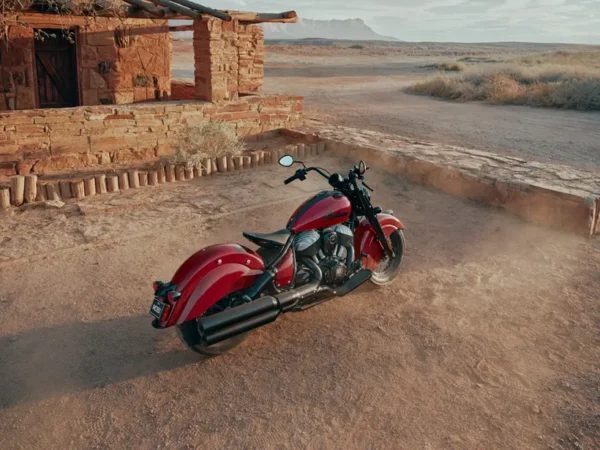
The inspiration is unmistakably drawn from the Chief models of the 1940s, an era when American motorcycles were as much about presence and durability as they were about speed. Wide, sweeping fenders dominate the silhouette, wrapping closely around 16-inch spoked wheels shod with balloon tyres. The curved handlebar, floating solo seat and pared-back stance echo a time when motorcycles were simpler machines, designed to be ridden daily and maintained with basic tools rather than software updates.
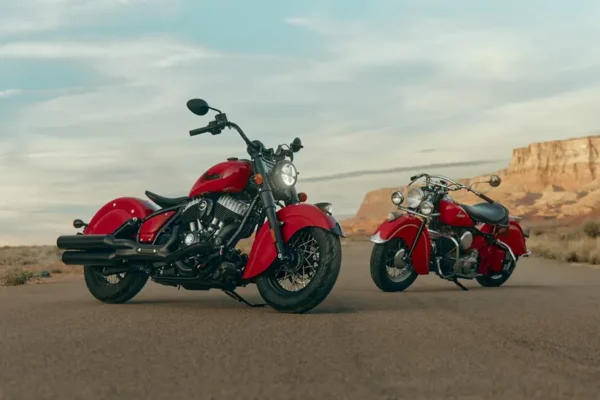
This retro direction is not accidental. The original Chief earned its reputation during a period shaped by war, industrial expansion and long-distance travel on imperfect roads. Reliability, mechanical honesty and visual authority mattered more than lap times. By revisiting that design language, Indian is tapping into a version of motorcycling that many riders feel has been diluted in an era of ever-increasing power outputs and digital complexity.
Yet the Chief Vintage is not a museum piece. Beneath the classic lines sit modern concessions that most riders now expect. Three riding modes—Tour, Standard and Sport—allow the bike’s character to shift depending on mood and road. LED lighting and ABS are quietly integrated, while the four-inch colour TFT display adds navigation and smartphone connectivity without overwhelming the cockpit. Importantly, Indian has addressed past criticism by improving start-up and loading times, a small but meaningful update that suggests the brand is listening to owners.
The bike’s physical presence reinforces its cruiser credentials. With a wet weight of 327kg and a low 686mm seat height, the Chief Vintage prioritises stability and approachability over agility. The air-cooled V-twin and six-speed gearbox are about torque and rhythm, not urgency. This is a motorcycle designed to roll through scenery, not attack it.
Pricing places the Chief Vintage squarely in the middle of Indian’s UK lineup. It undercuts the more performance-oriented Super Chief models while sitting above the stripped-back Dark Horse variants. That positioning reflects its role: a heritage-led cruiser for riders who value atmosphere and story as much as specification sheets.
More broadly, the Chief Vintage speaks to a wider trend in modern motorcycling. As technology accelerates, a growing number of riders are seeking machines that feel emotionally grounding rather than digitally impressive. Retro-styled bikes are no longer about nostalgia alone; they are a response to sensory overload, offering a slower, more tactile riding experience without abandoning modern safety standards.
In that sense, the Chief Vintage feels like an honest anniversary statement. It does not try to redefine the brand or outshine competitors on paper. Instead, it reinforces what Indian Motorcycle believes still matters after 125 years: character, continuity, and the idea that riding can be as much about connection to the past as it is about the road ahead.