
Hyundai has opened UK order books for the Hyundai IONIQ 6 N, its second full-fat performance EV, and the message is clear: this is not just about headline acceleration figures. While the IONIQ 6 N’s 641 horsepower and 3.2-second sprint to 62 mph grab attention, the real story lies in how deliberately Hyundai has engineered this car to feel engaging, repeatable, and usable as a performance machine.
Priced at £65,800 on the road, the IONIQ 6 N undercuts many established performance benchmarks while offering comparable straight-line pace. Power comes from an 84 kWh battery paired with a dual-motor all-wheel-drive setup. With N Launch Control and N Grin Boost activated, output peaks at 641 hp and 740 Nm of torque for short bursts. Without the temporary boost, power settles at a still-substantial 601 hp—figures that put it firmly in high-performance territory rather than “warm EV” status.
What sets the IONIQ 6 N apart is how much emphasis Hyundai places on driver involvement. The car builds on lessons learned from the IONIQ 5 N, refining features that initially divided opinion but proved surprisingly effective. The updated N e-Shift system simulates gear changes with shorter virtual ratios, while N Active Sound+ has been revised with hardware upgrades to better sync sound, torque delivery, and acceleration. Purists may still question simulated shifts and artificial noise, but in practice they address a real problem in performance EVs: the lack of sensory feedback at speed.
Hyundai has also leaned heavily into track functionality. Features like N Drift Optimizer, N Race mode, and pre-loaded racetrack maps position the IONIQ 6 N as a car designed for repeated hard use, not just brief bursts of speed. This is important in a segment where thermal management and consistency often matter more than peak power. A claimed range of up to 302 miles is respectable for a performance-oriented EV, though real-world driving—especially on track—will inevitably bring that figure down.
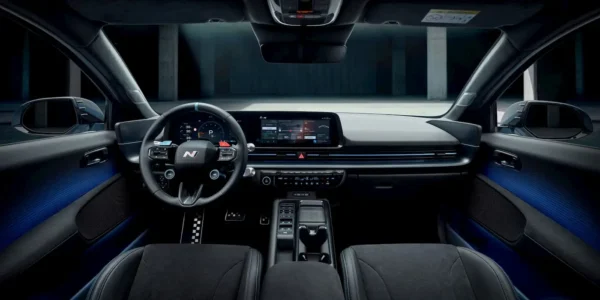
Inside, the IONIQ 6 N continues the theme of purposeful design. Bucket seats, N-branded metal pedals, and welcome lighting reinforce the car’s identity, while Hyundai’s latest ccNC infotainment system and an augmented-reality head-up display bring the tech up to date. Unlike some rivals, the interior avoids feeling overly theatrical, focusing instead on functionality and visibility.
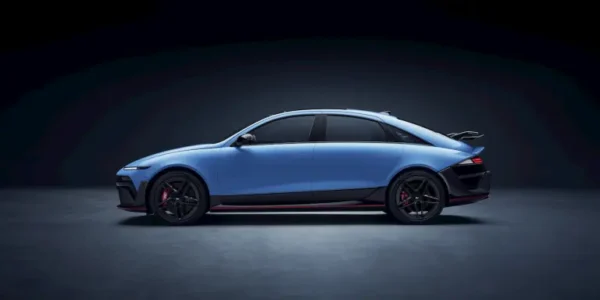
In terms of size, the IONIQ 6 N sits close to cars like the Porsche Taycan and BMW M3, but at a significantly lower price point. While it may not match the Taycan’s chassis sophistication or the M3’s combustion-engine character, it challenges both by offering serious performance with fewer compromises on cost.
Ultimately, the IONIQ 6 N represents a broader shift in the performance EV landscape. Rather than chasing maximum range or silent efficiency, Hyundai is betting that there is a growing audience for electric cars that feel intentionally dramatic and driver-focused. Whether enthusiasts fully embrace features like e-Shift and synthetic sound remains to be seen, but Hyundai deserves credit for tackling the emotional gap that many performance EVs still struggle to fill.
In a segment that often prioritizes numbers over nuance, the IONIQ 6 N stands out not because it is the most powerful or longest-range option, but because it tries—sometimes boldly—to make performance electric cars feel exciting in ways that go beyond raw speed.