Zenobē is expanding its presence in the US by partnering with the Trans Group and Educational Bus Transportation to electrify the school bus fleet serving Copiague Public Schools on Long Island, New York. On paper, the numbers are modest—10 electric school buses—but the impact reaches far beyond the vehicles themselves, touching the daily lives of roughly 4,500 students who rely on school transportation.
The project is partly funded through the New York School Bus Incentive Program, administered by New York State Energy Research and Development Authority. That public funding is paired with Zenobē’s private capital and operational support, allowing the district to adopt electric buses without shouldering the full upfront cost. Zenobē will also manage the charging infrastructure, offering what it describes as a turnkey solution—an approach designed to remove complexity for school districts that want cleaner buses but lack the technical expertise to manage charging and fleet operations on their own.
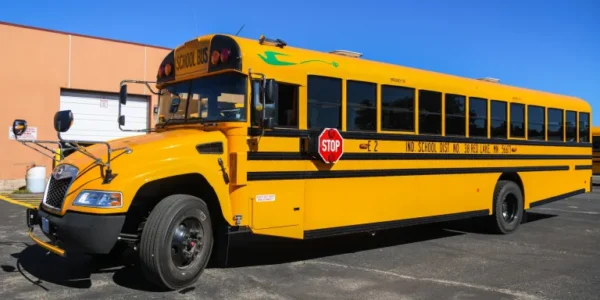
For Copiague, the shift is about more than emissions targets. Diesel school buses often idle for long periods and operate close to children, exposing students and drivers to pollutants that disproportionately affect young lungs. Replacing even a small portion of a fleet with zero-emission buses reduces noise, improves air quality, and sends a visible signal that student health is being taken seriously.
From the operator’s perspective, the partnership reflects a pragmatic transition rather than a leap of faith. The Trans Group, a long-time transportation provider in the region, framed the move as a continuation of an ongoing process rather than a disruptive overhaul. Combining state incentives with an experienced electrification partner helps mitigate risk and ensures that the transition doesn’t compromise service reliability—an essential concern for school transportation.
The project is also a case study in how public policy and private investment can align. New York’s Clean Water, Clean Air, and Green Jobs Environmental Bond Act underpins the incentive program, while Zenobē’s model absorbs much of the operational and financial complexity. Support from investors like KKR adds another layer of confidence, signaling that fleet electrification is no longer a niche experiment but a scalable business.
Globally, Zenobē already supports more than 3,400 electric vehicles across 120 depots, with operations spanning the UK, Australia, and New Zealand. Its strong position in the UK electric bus market suggests the company brings hard-earned experience to US school districts just beginning their electrification journey.
My view is that projects like Copiague’s matter precisely because they are unglamorous. Ten buses won’t transform transportation overnight, but they represent steady, repeatable progress. When cleaner technology is paired with sensible funding structures and operational support, electrification stops being a headline and starts becoming routine. And for students stepping onto a quieter, cleaner bus each morning, that routine change may be the most meaningful outcome of all.