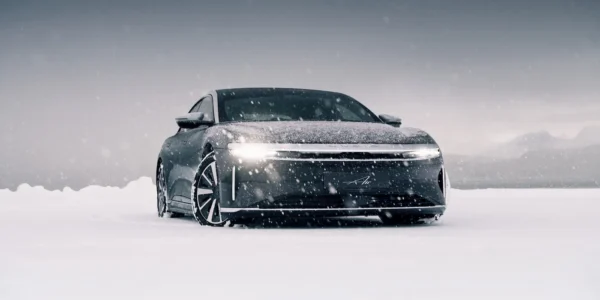
The latest result from Norway’s NAF Winter Test feels like one of those moments where numbers finally tell a story people can feel. In the coldest winter test on record — with temperatures plunging to an unforgiving -31°C — the Lucid Air Grand Touring didn’t just win. It endured. Starting from Oslo with a full charge like every other competitor, it traveled 519 km (322 miles) before it could no longer hold the speed limit, finishing with just 1% battery remaining.
In isolation, 519 km might sound modest compared to its WLTP rating of 960 km, but winter testing is where EV claims are stripped of optimism. Heating systems, cold-soaked batteries, rolling resistance on snow — everything works against range. Against that backdrop, Lucid’s performance stands out not as a marketing win, but as proof of real-world resilience.
What makes this result even more compelling is the competition it beat. Vehicles like the Mercedes-Benz CLA, Audi A6, BMW iX, and Tesla Model Y are not efficiency laggards. Many are class leaders in their own right. Yet the Lucid still finished nearly 100 km ahead of second place. Even the winter range benchmark set last year by the Polestar 3 came only slightly higher, at 531 km — a reminder of just how narrow the margins are at the very top.
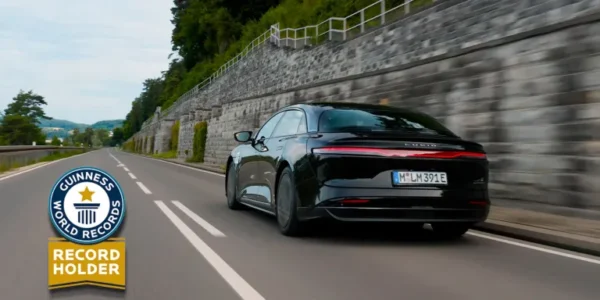
This isn’t an isolated achievement either. The same model topped the 2025 NAF Summer Test with 828.6 km and later set a Guinness World Record by traveling 1,205 km on a single charge. Patterns matter, and Lucid’s pattern is consistency across extremes. While many rivals chase larger batteries or headline acceleration figures, Lucid’s edge clearly lies in efficiency — motors, aerodynamics, and power electronics working as a unified system.
Within its segment, the Lucid Air Grand Touring now occupies a unique space. It doesn’t try to be the sportiest or the most aggressively styled luxury EV. Instead, it quietly appeals to drivers who value predictability and confidence, especially in harsh climates where range anxiety isn’t theoretical.
In my view, this winter test result strengthens Lucid’s credibility more than any spec sheet ever could. As the brand prepares to scale with more affordable midsize EVs, this kind of third-party validation sends a powerful message: efficiency isn’t just Lucid’s philosophy — it’s its defining advantage.