There’s a growing realization in the electric motorcycle world that real progress may come from going smaller, not bigger. While premium electric bikes and high-end e-bikes dominate headlines, the largest opportunity for electrification could lie at the opposite end of the market: ultra-basic, ultra-affordable electric motorcycles built for everyday transportation.
A newly filed patent from Honda offers a clear window into that thinking. Spotted by motorcycle journalist Ben Purvis, the design outlines a no-frills electric commuter aimed squarely at cost-sensitive regions like India and parts of Africa, where simple motorcycles are not hobbies or lifestyle choices, but essential tools for daily life.
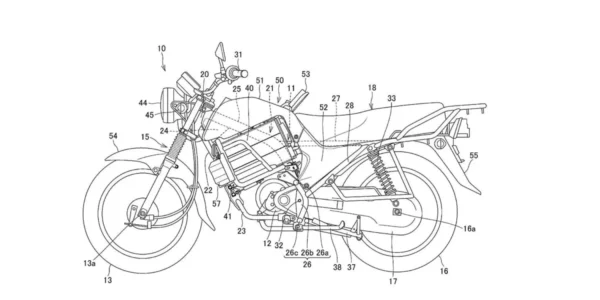
The bike itself is deliberately old-school. There’s no aluminum chassis, no digital rider aids, and no premium suspension. Instead, Honda sticks with a conventional steel frame, dual rear shocks, and even a cable-operated front drum brake — components chosen not for performance, but for durability, ease of repair, and low cost. In place of a small air-cooled single-cylinder engine sits a compact electric motor and two removable battery packs.
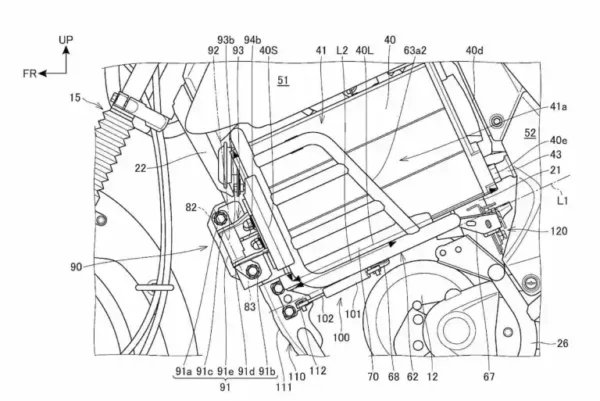
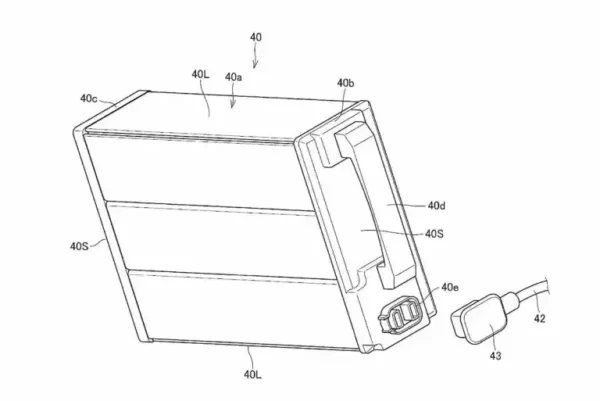
Those batteries are where the patent becomes genuinely interesting. Rather than hiding them inside the frame or permanently bolting them in place, Honda mounts each battery in a hinged metal cage on either side of the bike. The cages swing outward, allowing the batteries to slide free, then lock back into position using a simple mechanical latch hidden under a tank-style cover. Riders remove the batteries and charge them indoors using basic cables — no onboard charger, no automated connectors, no infrastructure dependency.
What’s notable is that Honda appears to be moving away from its own swappable battery standard, likely in favor of a slimmer, cheaper battery design better suited to motorcycles like this. Honda hasn’t released details on battery chemistry, range, or performance, but the goal is obvious: make the electric drivetrain cheaper than the small gasoline engine it replaces.
Compared to flashy electric motorcycles chasing speed, software, and premium margins, this concept feels refreshingly grounded. It prioritizes affordability, repairability, and practicality — exactly what millions of riders actually need.
In my view, this patent captures something many EV makers overlook. Electrification doesn’t always advance through more technology. In many parts of the world, the fastest path to cleaner transport is simply replacing the engine with something quieter, cheaper to run, and easier to live with. If Honda brings this concept to production, it may not redefine electric motorcycles — but it could quietly electrify mobility for the people who need it most.