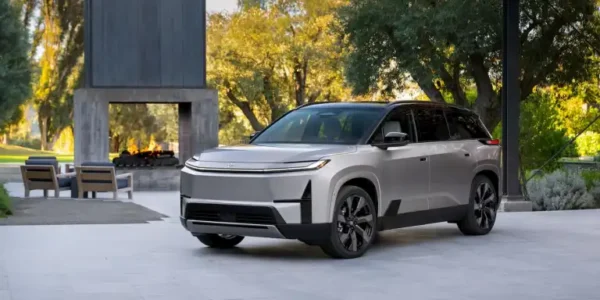
The all-new Toyota Highlander EV finally gives Toyota something it has been missing in the US market: a fully electric family SUV that feels purpose-built, not experimental. With up to 320 miles of projected range, a built-in NACS port for Tesla Supercharger access, and US-based production in Kentucky, this isn’t just another compliance EV — it’s a strategic vehicle.
On paper, the numbers are competitive. The 95.8 kWh battery offering up to 320 miles puts it right in the sweet spot for American suburban families. The dual-motor AWD variant delivering 338 horsepower is more than enough for highway merging, winter driving, or light towing duties. And features like Multi-Terrain Select and Crawl Control suggest Toyota still understands that SUV buyers want versatility, not just efficiency.
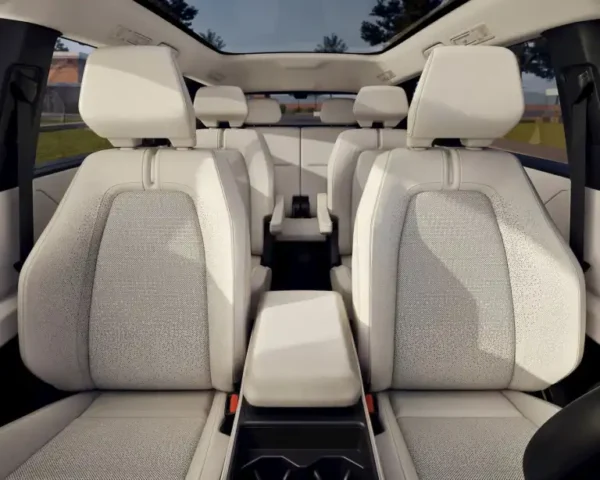
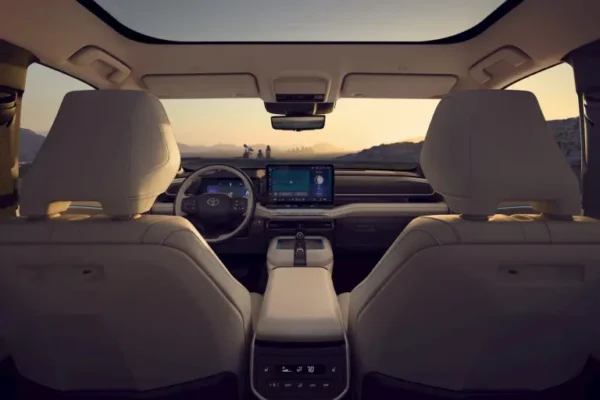
Inside, Toyota leans into comfort and usability. A 14-inch infotainment display, 12.3-inch driver screen, SofTex seating, and over 45 cubic feet of cargo space with the third row folded make it practical for real life. Add Vehicle-to-Load (V2L) capability, and it becomes a mobile backup generator — something that resonates strongly in storm-prone US states, rural Canada, and parts of Australia.
Price positioning will be critical. If it lands around $50,000, it undercuts the fully loaded versions of the Kia EV9 and sits comfortably below the larger, more premium Hyundai IONIQ 9. The EV9 still has stronger brand momentum in the EV space, but Toyota brings something arguably more powerful: mainstream trust and dealer scale.
Regionally, the Highlander EV makes the most sense in the US and Canada, where three-row SUVs dominate family garages and charging infrastructure is expanding rapidly. Australia could also be a natural fit given its appetite for large SUVs and outdoor utility. Europe is more nuanced — three-row SUVs are less common in urban markets, though it could find traction in Nordic countries with strong EV adoption.
My view? The Highlander EV may not be the flashiest electric SUV, but it might be the most strategically important one Toyota has launched. If priced right, it has the potential to become the electric default for mainstream families — and that’s where real volume lives.