At the Kempower MCS Live Winter Days 2026 event in Sweden, MAN Truck & Bus chose about the harshest conditions possible to showcase its electric semi. In sub-zero temperatures in Norrköping, the company demonstrated megawatt charging capability on its new eTruck platform — and that matters more than it might sound.
MAN began series production of its battery-electric trucks last summer, building diesel and electric models on the same flexible line. The real hurdle now isn’t manufacturing capacity — it’s convincing fleet operators that the economics work. Total cost of ownership depends heavily on uptime, and for long-haul logistics, charging speed is everything.
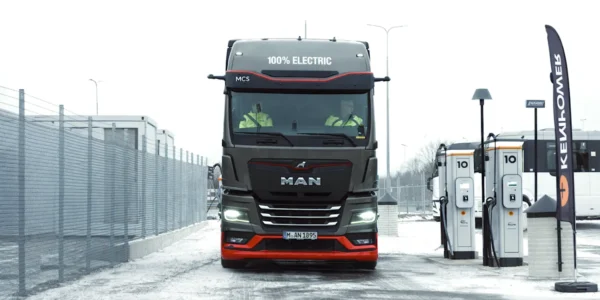
Using the Kempower Mega Satellite system, capable of delivering up to 1.2 MW, MAN’s trucks charged at 750 kW — currently the vehicle’s maximum rate — despite freezing weather. That’s a key validation. Cold temperatures are notorious for slowing charging speeds and stressing battery systems. Demonstrating stable communication, controlled charging curves, and reliable hardware integration under those conditions helps move megawatt charging from theory to practical reality.
The electric MAN eTGX and MAN eTGS are now available with the MCS option, with production of that configuration beginning in Q2 2026. For fleet operators watching closely, this signals that the megawatt charging ecosystem is maturing.
My view? The transition to electric heavy-duty transport won’t hinge on range alone — it will hinge on charging reliability at scale. If megawatt charging proves dependable in winter conditions, one of the last major psychological and operational barriers to electric long-haul trucking starts to fall.