When Amazon pledged in 2019 to deploy 100,000 electric delivery vans by 2030, it sounded ambitious — maybe even aspirational. Fast forward to 2025, and the partnership with Rivian is beginning to show real scale.
According to Rivian’s latest earnings update, Amazon now has more than 30,000 custom-built Electric Delivery Vans (EDVs) operating across thousands of US cities. That’s a more than 50% fleet increase in 2025 alone — a meaningful acceleration compared to previous years.
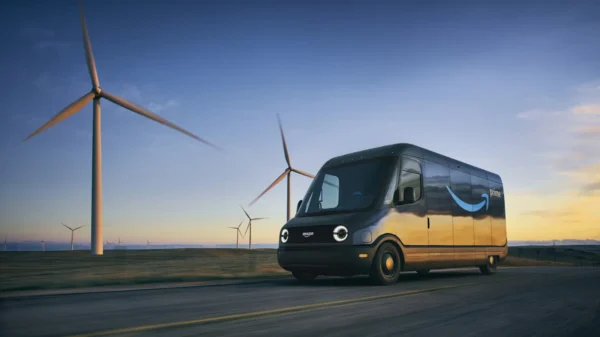
The vans weren’t simply adapted from passenger vehicles. They were purpose-built around delivery efficiency. Features like the automatic bulkhead door and driver-focused layout are designed to cut seconds off every stop, reducing total cost per package. Rivian also confirmed that new variants are in development, including a larger battery option promising 30% more range and an AWD version for improved traction in snow and mud — key upgrades for expanding route coverage nationwide.
Production began in 2022, meaning it took just over three years to reach the 30,000-unit milestone. At that pace, hitting 100,000 by 2030 will require continued ramp-ups. Encouragingly, Amazon has also built the supporting infrastructure, installing over 17,000 EV chargers across 120 delivery centers — quietly becoming one of the largest private charging operators in the US.
My view? The Amazon–Rivian partnership is shifting from symbolic climate commitment to operational reality. The real test now isn’t ambition — it’s execution at scale. If production keeps accelerating, 100,000 electric vans by 2030 looks less like a promise and more like a probability.