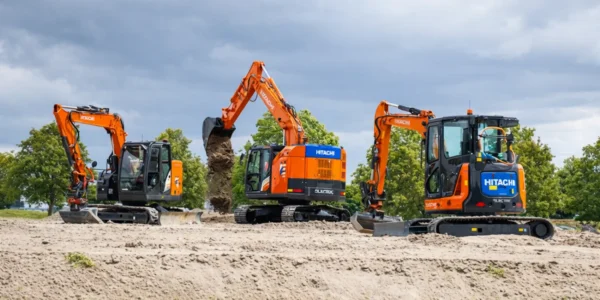
Hitachi Construction Machinery is expanding its electric construction lineup with the new Hitachi ZX135-7EB, a 13-ton battery-powered excavator designed to match — or even outperform — its diesel counterpart.
On paper, the ZX135-7EB looks like a serious step forward. Equipped with a 198 kWh battery, it’s built for demanding job sites where emissions and noise restrictions are tightening, particularly in urban and residential areas. But the real differentiator is flexibility. On sites with access to three-phase grid power, the machine can operate while plugged in, effectively enabling continuous 24/7 operation once the battery is depleted. That hybrid-style operating model addresses one of the biggest concerns around electric heavy equipment: downtime.
Timing also matters. The announcement arrives just ahead of CONEXPO-CON/AGG 2026 in Las Vegas, where electrification is expected to dominate discussion across the industry. It also follows news that Itochu Corporation will increase its stake in Hitachi Construction Machinery, signaling a broader push into North America and other growth markets.
For contractors, the value proposition isn’t just environmental. Reduced fuel costs, lower maintenance needs, and the ability to bid on projects with strict emissions requirements could provide real competitive advantages.
My view? Electric construction equipment is moving beyond pilot projects and into scalable deployment. If machines like the ZX135-7EB can truly match diesel performance while offering plug-in flexibility, the transition to zero-emission job sites may accelerate faster than many in the industry expect.