BYD is preparing to showcase a new generation of electric vehicle technology, and its flagship luxury sedan, the Yangwang U7, will be the first to introduce the company’s next-generation Blade Battery 2.0. According to BYD executives, the new battery system could deliver a remarkable driving range of up to 1,006 km (625 miles) under the CLTC testing cycle — pushing the boundaries of what modern EVs can achieve.
The announcement comes at an important moment for BYD. After surpassing Tesla in global EV sales last year, the Chinese automaker entered 2026 as the industry’s volume leader. Yet the domestic market in China has become increasingly competitive, with dozens of new electric vehicles from local brands flooding the market. To maintain its momentum, BYD is focusing on technological innovation, including faster charging systems, smarter driving software, and more advanced battery designs.
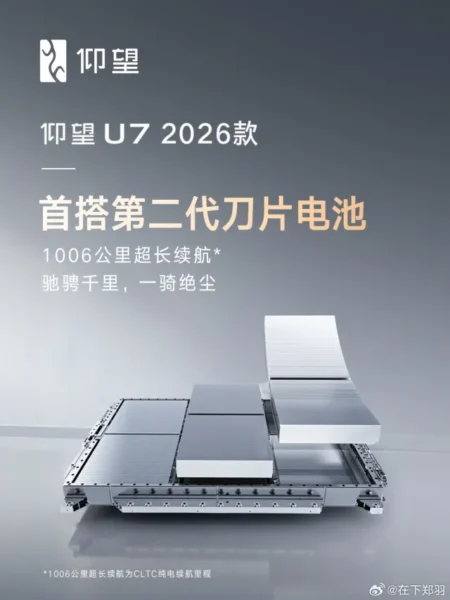
The Blade Battery 2.0 represents the next step in that strategy. BYD’s original Blade Battery gained widespread attention for its safety and durability thanks to its lithium iron phosphate (LFP) chemistry and structural design. The second-generation version is expected to build on those strengths while dramatically improving performance.
According to Zheng Yu, Product Director for BYD’s luxury brand Yangwang, the new battery is designed to overcome what many engineers call the EV “impossible triangle”: achieving high performance, long driving range, and fast charging simultaneously. Traditionally, improving one of these factors tends to compromise the others due to the physical limits of battery chemistry.
BYD claims that Blade Battery 2.0 addresses this challenge through a combination of upgraded cell technology, improved thermal management, and integration with a high-voltage vehicle platform. In the case of the Yangwang U7, the battery works alongside a powerful four-motor drivetrain, allowing the sedan to deliver both extreme performance and exceptional range.
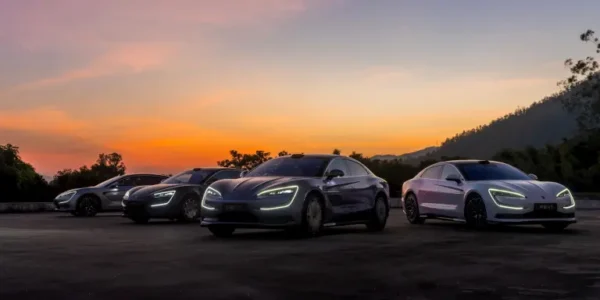
If the claimed 1,006 km range proves realistic, it would place the U7 among the longest-range electric vehicles currently announced. BYD’s luxury sub-brand Denza recently made a similar claim for the Denza Z9 GT, which is expected to reach up to 1,036 km of CLTC range.
However, it is worth noting that CLTC figures tend to be more optimistic than the WLTP or EPA testing standards used in Europe and the United States. Even so, achieving a real-world range approaching 800 km would still represent a major milestone for the industry.
The Yangwang U7 itself is positioned as an ultra-luxury electric sedan aimed at competing with high-end vehicles from brands such as Mercedes-Benz, BMW, and Porsche. With advanced technology, high performance, and an emphasis on innovation, it reflects BYD’s ambition to move beyond mass-market EVs and establish a presence in the global premium segment.
In my view, the Blade Battery 2.0 and the Yangwang U7 highlight how quickly the EV industry is evolving. Just a few years ago, a 500-km range was considered impressive. Now manufacturers are pushing toward 1,000 km while also improving performance and charging speeds. If BYD can deliver these capabilities at competitive costs, it may further strengthen its position as one of the most technologically influential companies shaping the future of electric mobility.