
A new industry coalition launched this week with a striking argument: the United States may not need as much new energy infrastructure as many believe. Instead, much of the solution could lie in using the existing power grid more efficiently. The coalition, called Utilize Coalition, brings together major companies including Tesla, Google, and Carrier Global.
Their central claim is simple but powerful: the US electrical grid operates at only about 53% of its total capacity on average, according to research from Duke University. That means nearly half of the system’s potential transmission capability sits unused most of the time. Yet utilities continue investing heavily in new infrastructure to handle short periods of peak demand that occur only a few hours each year.
Because building and maintaining grid infrastructure is expensive, the cost of electricity depends heavily on how efficiently that infrastructure is used. If power lines, substations, and generation assets remain idle for large portions of the year, consumers ultimately pay more for each kilowatt-hour delivered.
Studies cited by the coalition reinforce this argument. Research from Stanford University suggests many transmission lines in the western United States operate at just 18% to 52% of capacity, with most clustered around roughly 30%. Analysts estimate that between 76 and 215 gigawatts of additional electricity demand could potentially be served using existing grid infrastructure without exceeding historical peak loads.
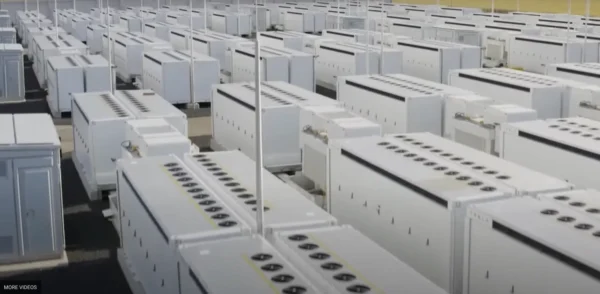
The coalition believes smarter grid management could unlock those unused resources. Technologies like battery storage, distributed energy systems, demand response programs, and virtual power plants are already demonstrating how flexible energy systems can shift electricity use away from peak periods. Tesla, for example, has been expanding its energy business rapidly, deploying 46.7 gigawatt-hours of energy storage in 2025 alone while developing new Megapack production capacity in Houston.
At the same time, companies like Google are facing rapidly growing electricity demand as artificial intelligence and cloud computing expand. Data centers already consume enormous amounts of power, and projections suggest US data center demand could reach 134 gigawatts by 2030. If grid capacity can be used more efficiently, large electricity users may be able to connect new facilities without waiting years for new transmission lines or power plants to be built.
The coalition has already seen its first legislative progress. A new bill in Virginia requires utilities to measure and report grid utilization rates, potentially creating new regulatory pressure to improve efficiency in how the grid is operated.
Final perspective: The idea behind Utilize highlights an important shift in thinking about energy systems. Instead of focusing only on building more infrastructure, the industry is beginning to look at how existing resources can be optimized through smarter technology and policy. If the coalition’s claims prove accurate, improving grid utilization could reduce costs, accelerate clean energy adoption, and make the energy transition more practical for both consumers and businesses.