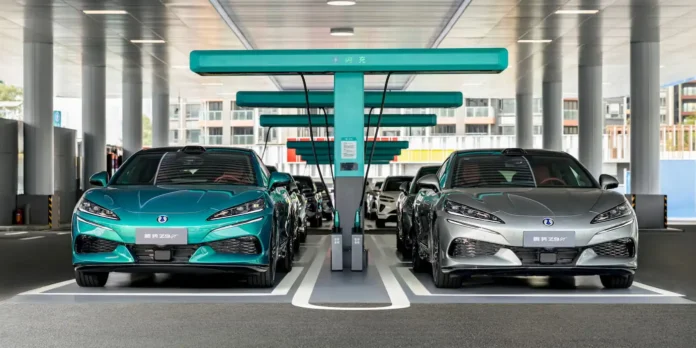
The global expansion strategy of BYD appears to be entering a new phase. During a recent interview in São Paulo, BYD Executive Vice President Stella Li confirmed that the company is actively studying the Canadian market as a potential location for a fully owned manufacturing facility. At the same time, she signaled that the Chinese automaker could consider acquiring an established but struggling carmaker to accelerate its international growth.
The comments highlight how aggressively BYD is positioning itself as a global automotive powerhouse. Over the past few years, the company has rapidly expanded beyond China, building manufacturing plants in Europe, Latin America, and Southeast Asia while significantly increasing its export volumes.
Canada emerges as a strategic gateway
Canada has recently become a key focus for Chinese EV manufacturers. The country introduced new rules in early 2026 allowing Chinese-built electric vehicles to enter the market with a reduced tariff of about 6.1%, replacing the previous 100% tariff barrier that effectively blocked imports.
The agreement allows up to 49,000 Chinese-made EVs annually, with the quota gradually increasing over time. For companies like BYD, this policy shift dramatically improves the economics of entering the Canadian market.
However, BYD appears unwilling to pursue the joint venture model often favored by governments seeking to attract foreign manufacturers. Stella Li made it clear that the company prefers full ownership and operational control of any manufacturing facility.
That approach reflects BYD’s vertically integrated business model. Unlike many automakers, BYD produces most of its critical components internally, including batteries, motors, semiconductors, and power electronics. Sharing production with a partner could complicate this tightly integrated system.
Acquisitions could accelerate global expansion
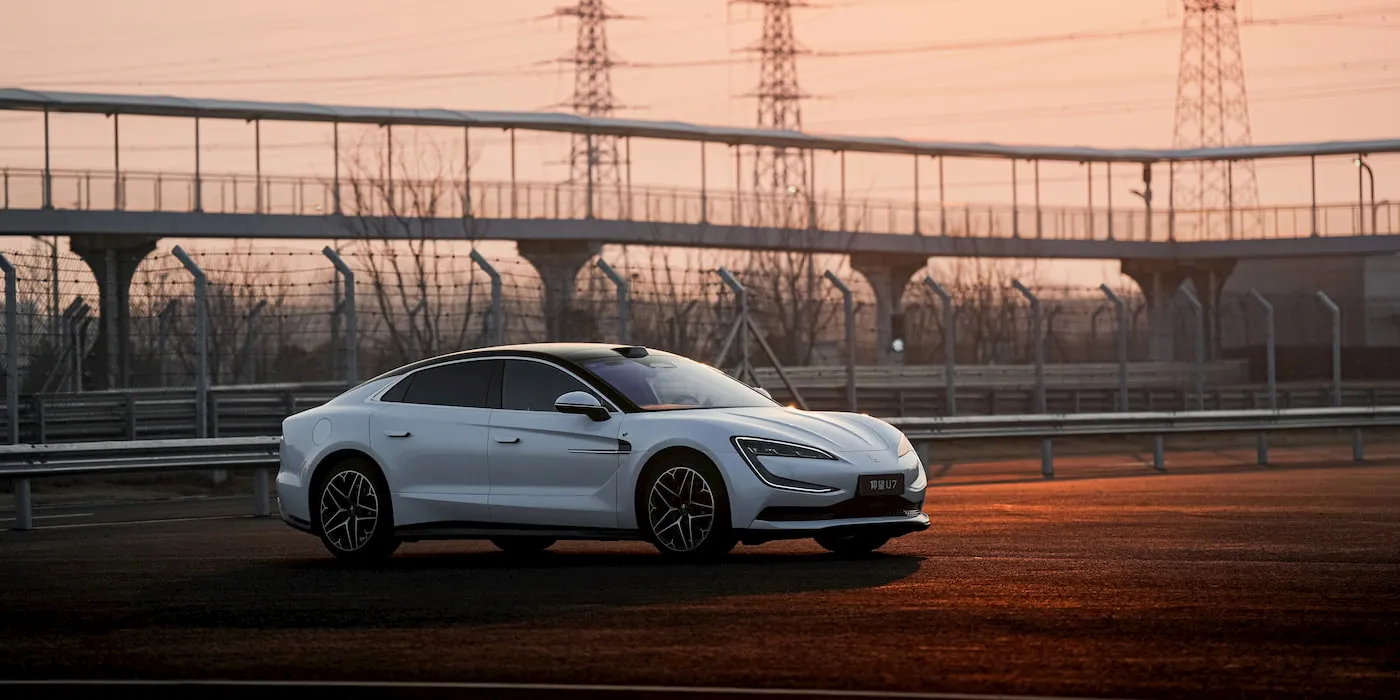
Perhaps even more significant than the Canadian factory discussion was Li’s acknowledgement that BYD is evaluating potential acquisitions of legacy automakers.
The global auto industry is currently under enormous financial pressure as traditional manufacturers attempt to maintain gasoline-powered vehicles while simultaneously investing billions into electrification. Some companies are struggling to manage the transition.
BYD’s leadership appears to see opportunity in this disruption. By acquiring existing brands or factories, the company could expand its global manufacturing footprint more quickly than building entirely new plants.
There is historical precedent for this strategy. More than a decade ago, Geely purchased Volvo Cars from Ford and successfully revitalized the brand while accelerating its electrification efforts.
Given BYD’s enormous production scale — the company sold more than 2 million battery-electric vehicles in 2025, surpassing Tesla in global BEV sales — it has the financial capacity to pursue a similar strategy.
Expansion continues across multiple regions
Canada is just one piece of BYD’s broader international push. The company is currently ramping up a passenger vehicle factory in Hungary and considering another facility in Turkey. In Latin America, BYD already holds a strong market position, controlling roughly 70% of Mexico’s EV and plug-in hybrid market.
At the same time, the company is reportedly exploring high-profile branding opportunities, including a possible entry into Formula One to boost global recognition.
Interestingly, one major market remains off the table: the United States. High tariffs on Chinese EVs and restrictions on connected vehicle technology make entry into the US market extremely difficult for Chinese manufacturers.
Final perspective
BYD’s exploration of a Canadian manufacturing facility reflects the company’s ambition to become a truly global automaker. With strong vertical integration, competitive battery technology, and rapidly expanding exports, BYD is positioning itself to challenge traditional car companies across multiple regions. However, success in markets like Canada will depend not only on manufacturing investment but also on navigating political sensitivities, trade policies, and consumer perceptions of Chinese brands.