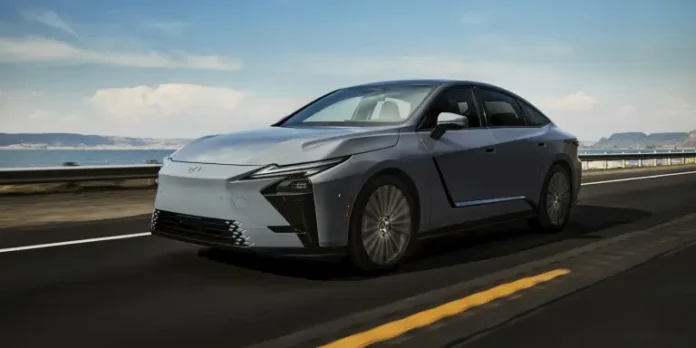
Xiaomi has officially unveiled the next-generation SU7 electric sedan, and this is more than a routine refresh. The company is clearly aiming to widen its lead in China’s competitive EV market, especially against Tesla.
Starting at 229,900 yuan (around $33,000), the new SU7 remains cheaper than the Tesla Model 3 while offering significant upgrades in performance, technology, and charging capability.

A Major Leap in Platform and Charging Technology
The most important upgrade lies beneath the surface: the electrical architecture.
Standard and Pro models move from 400V to 752V
Max model increases from 871V to 897V, approaching a true 900V system
This translates directly into real-world benefits:
Up to 670 km of range added in just 15 minutes (Max version)
10% to 80% charge in approximately 11 minutes
Support for 5C ultra-fast charging
These figures place the SU7 among the fastest-charging EVs currently available, outperforming many rivals including Tesla in charging speed.
Range Improvements That Redefine the Segment
Range has been significantly improved across all variants:
Standard: 720 km CLTC
Pro: 902 km CLTC
Max: 835 km CLTC
The Pro version stands out with its 902 km rating, which roughly translates to over 650 km in real-world conditions.

For comparison:
Tesla Model 3 RWD (China): 634 km CLTC
Xiaomi SU7 Standard: 720 km CLTC at a lower price
Xiaomi is not just competing on price anymore; it is outperforming on core EV metrics.
Performance and Driving Dynamics Upgraded
All versions now feature Xiaomi’s new V6s Plus motor:
Single-motor variants: 320 hp
Dual-motor Max: 690 hp
Chassis and handling also receive meaningful improvements:
Wider staggered tires (245 mm front, 265 mm rear)
Four-piston front brake calipers as standard
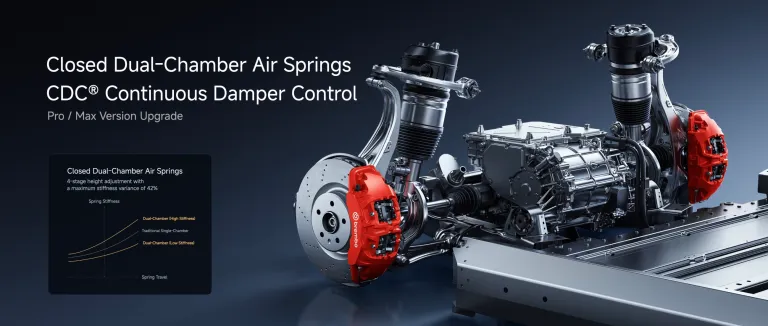
Brembo brakes on the Max version
Notably, the Pro model now includes:
Dual-chamber air suspension
Continuous Damping Control (CDC)
These were previously reserved for the top-tier model, making the mid-range version far more competitive.
Advanced Driver Assistance Now Standard Across the Lineup
One of the most aggressive moves from Xiaomi is making advanced hardware standard across all trims.
Every SU7 now includes:
LiDAR sensor
4D millimeter-wave radar
700 TOPS computing platform
HAD (Highway Autonomous Driving) system
This is unusual in the industry, where such features are typically reserved for premium models.
In contrast:
Tesla relies on a vision-only system without LiDAR
Many competitors restrict LiDAR to higher trims
Xiaomi is effectively bringing high-end autonomous hardware to entry-level pricing.
Safety Enhancements Address Previous Concerns
Following earlier criticism, Xiaomi has reinforced safety across the board:
2,200 MPa ultra-high-strength steel in key areas
1,500 MPa reinforced battery protection structure
Airbags increased from 7 to 9
Door handles now include mechanical backup systems

These updates show a clear focus on improving trust and long-term reliability.
Design Updates: Subtle but Effective
Exterior and interior changes remain minimal but refined:
New Capri Blue exterior color
Updated headlight design
New 20-inch wheel options
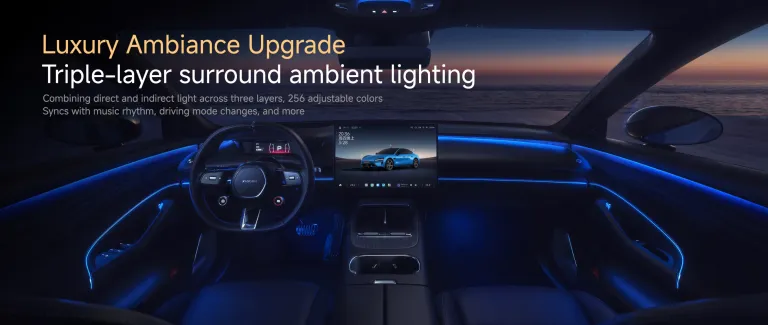
“Dark Night Black” interior theme
Enhanced ambient lighting
Xiaomi has chosen not to overhaul the design, which was already well received in the previous generation.
Pricing and Market Positioning
Trim New Price Increase
Standard 229,900 yuan +10,000
Pro 259,900 yuan +14,000
Max 309,900 yuan +10,000
For context:
Tesla Model 3 RWD (China): 235,500 yuan
SU7 Standard: about 5,600 yuan cheaper
Despite the price increase, the SU7 delivers:
Longer range
Faster charging
More advanced hardware
Higher standard equipment
This creates a strong value proposition that is difficult to match in the current market.
Final Assessment
The Xiaomi SU7 2026 is not just an incremental update. It represents a strategic push to dominate the mid-to-premium EV segment.
Strengths:
Class-leading range
Ultra-fast charging capability
Advanced driver assistance hardware as standard
Competitive pricing
Areas to watch:
Real-world performance of the HAD system
Long-term durability and software stability
Expansion beyond the Chinese market
If Xiaomi can maintain quality and reliability, the new SU7 has the potential to become one of the most compelling alternatives to the Tesla Model 3, not only in China but globally.