The GV90 is shaping up to be the largest and most luxurious vehicle Genesis has ever built—but it won’t be arriving as soon as many expected. After another schedule shift, the flagship electric SUV is now unlikely to debut in early 2026. For buyers waiting on what Genesis itself calls an “ultra-luxe” full-size electric SUV, the wait may extend into the second half of 2026.
Originally, the GV90 was slated to enter production at Hyundai Motor’s Ulsan plant in South Korea by the end of last year, with sales beginning in early 2026. That plan changed last May, when Hyundai Motor’s product roadmap—reviewed by The Korea Economic Daily—pushed mass production back to June 2026. Now, a new report from The Korean Car Blog suggests Genesis is delaying the launch even further.
Why the delay?
According to the report, the latest postponement stems from unresolved technical challenges and a recent executive reshuffle within the organization. In December, former Porsche and BMW executive Manfred Harrer was promoted to President and head of R&D at Hyundai Motor Group. Around the same time, Sean Lee was appointed Global Head of Genesis.
Those leadership changes matter because the GV90 isn’t just another model—it’s meant to set the tone for Genesis’ next chapter. The brand is expanding into high-performance vehicles under its Magma sub-brand, moving deeper into ultra-luxury territory, and broadening its electrification strategy to include hybrids and extended-range EVs (EREVs). Getting the GV90 right is central to all of that.
A technology-heavy flagship
From what’s known so far, the GV90 will debut several firsts for Hyundai and Genesis. It’s expected to be the first vehicle on Hyundai’s next-generation eM platform, which will replace the current E-GMP architecture. Hyundai claims the eM platform will deliver up to a 50% increase in driving range and support Level 3 autonomous driving—ambitious targets that raise the bar for validation and software integration.
The GV90 is also expected to introduce Hyundai’s new Pleos infotainment system and operating system, underscoring the group’s push toward software-defined vehicles (SDVs). In that context, a delay starts to look less like hesitation and more like caution: software-first vehicles leave little room for early mistakes.
Design ambitions, production realities
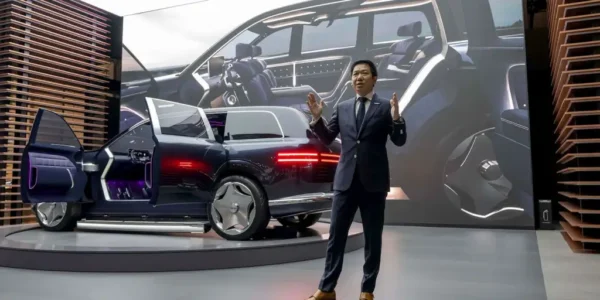
Visually and conceptually, the GV90 is aiming high. Ultra-premium features such as coach doors have been spotted on early prototypes, reinforcing its flagship status. However, recent test vehicles appear without them, suggesting Genesis may streamline production at launch. Coach doors could still appear later on higher trims, but the shift hints at a pragmatic approach to manufacturing complexity.
An open-ended outlook
For Genesis, delaying the GV90 risks cooling some early excitement—but launching a flawed or underwhelming flagship would be far worse. In the ultra-luxury EV space, first impressions matter, and expectations are unforgiving. If extra time allows Genesis to deliver on range, autonomy, software polish, and craftsmanship, the delay may ultimately strengthen the GV90’s impact.
The open question is whether buyers will be willing to wait—and whether Genesis can use that time to ensure its most ambitious vehicle yet truly earns its flagship status when it finally arrives.